


The briefing
On Thursday 22 October, I braved Storm Austen to attend People's Emergency Briefing #4000 at the Community Centre in my village, Princetown.
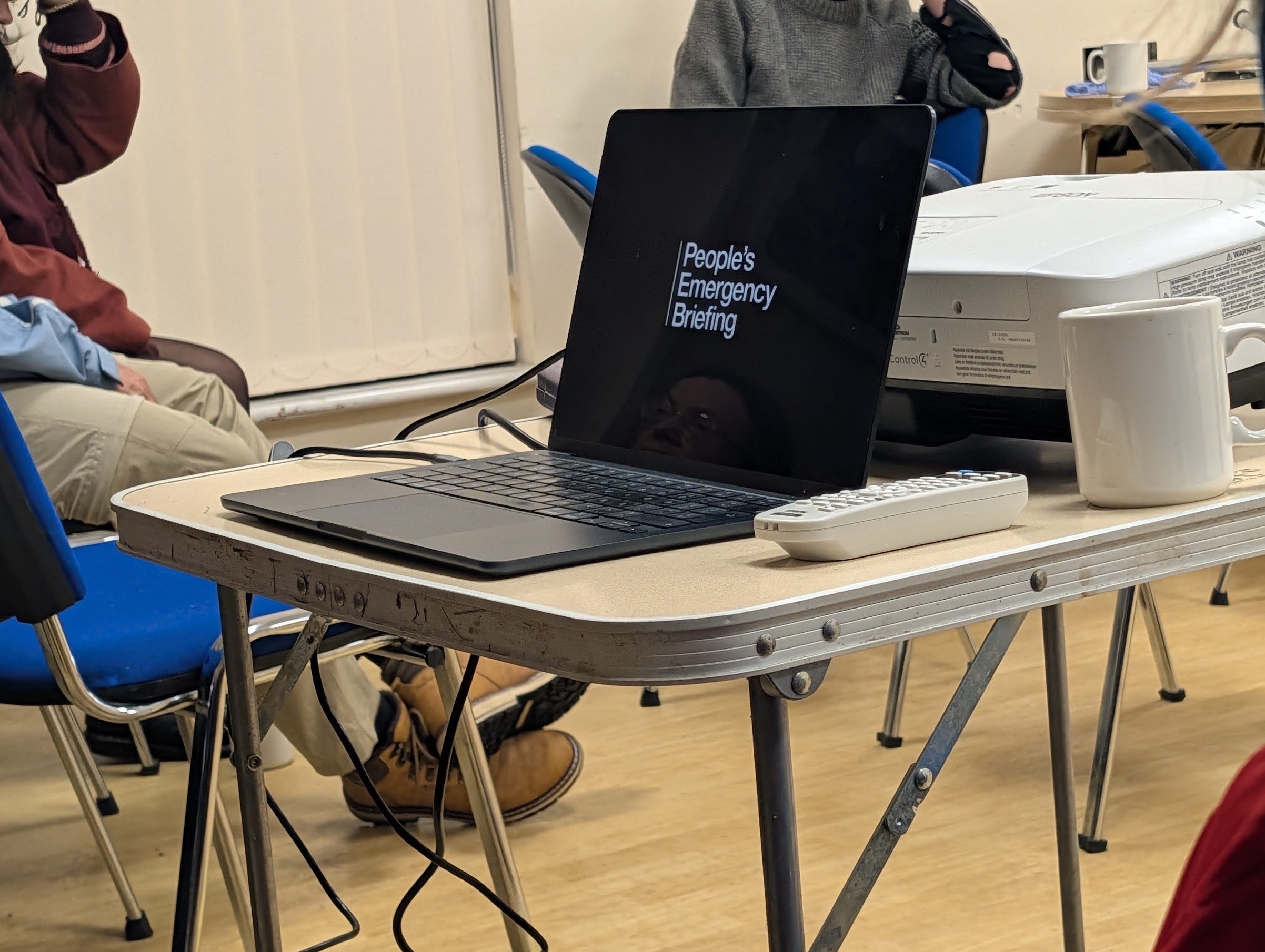
It was run by kind volunteers from Totnes, who know the town's Energy Local scheme, in which members buy power from local generators. The turnout of 40 to 50 was impressive. I'm not sure whether the storm or the Jackdaw announcement drew more people.
I work deep inside the energy sector, so it was interesting to hear from people outside it. They are frustrated with Government, with energy companies, and with landlords and owners. Wittingly or not, these have together left ordinary people with some of the most expensive, and least secure, energy bills in the world.
The politics in the room were predictable. Conservative governments, and our local MP, took most of the blame. (I have never seen quite so many Free Palestine badges outside the M25.) Labour was never named. It appeared only as "the Government", which had just decided this or that. There was an easy assumption that the Liberal Democrats, who now hold many seats across the South West, would do better. Reform and the Greens, the two parties with the loudest views on net zero, from opposite ends, were not mentioned at all.
The policy agenda was selective too. Jackdaw came up again and again. The newly legal plug-in solar did not, and nor did reports that ministers want to cut the heat pump grant.
To be fair to them, the effective ban on onshore wind in England was not a coalition policy. It came in June 2015, a month after the coalition ended, from the new Conservative majority government, and Labour lifted it in July 2024. Still, I pushed back a little on the Lib Dems. Backing a controversial wind farm or pylon line near the people who vote for you takes courage, whatever colour your rosette. As we'll see, the South West has mostly avoided that test, and it is paying for it.
If a People's Emergency Briefing comes to a village hall near you, go. It is the closest thing to a focus group on climate you'll ever get to attend.
Few of the facts surprised me. I would question how some were presented, for example the cost of offshore wind.
Four misunderstandings I keep meeting
1. Heating is most of the problem
People underestimate how much of our energy goes on heating.
In 2024 the UK used 1,473 TWh of energy at the point of use. 42% of it, 619 TWh, went on heat: warming rooms, heating water, cooking and industrial processes. Transport took 43%. Lights, appliances and machines, which is what most people picture when they think of "energy", took only 15%.
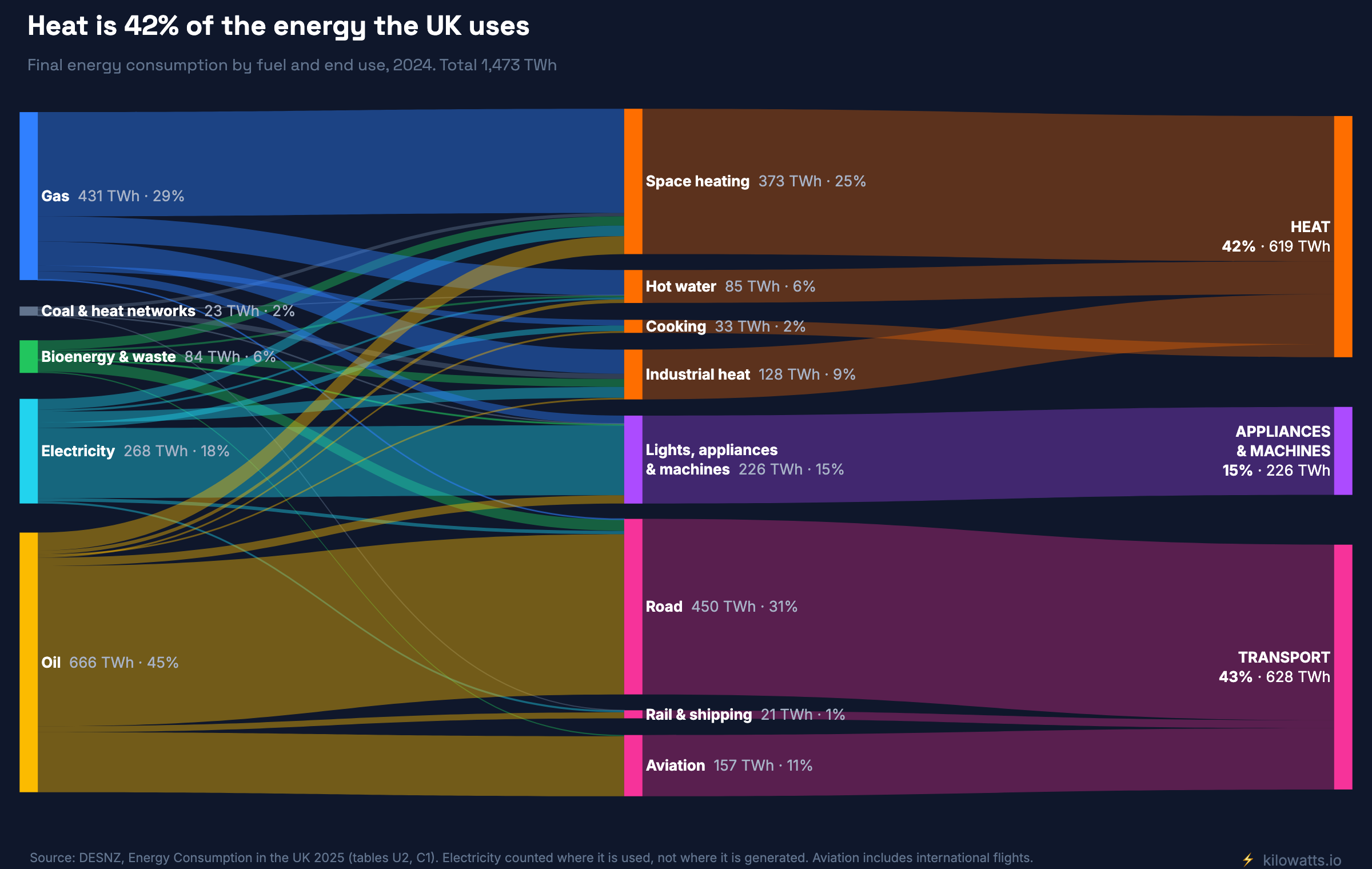
Two more details sharpen the point:
Leave out international flights and heat becomes the largest use outright, at 47%.
Only 12% of that heat comes from electricity. The rest is mostly gas burned in boilers. That is why, in a gas shortage, Britain would switch off its power stations before it cut off one gas boiler. On a cold morning, the gas grid delivers more energy to homes than the electricity grid does all day.
And the thing people still picture first when you say "saving energy" is switching off the lights. Lighting in UK homes used 4 TWh in 2024, about 1% of household energy and 4% of household electricity. That is down 72% since 2010, as LED bulbs replaced incandescent ones. Across homes, offices, shops and factories, lighting is under 2% of all the energy the UK uses. For every kilowatt-hour that lights a home, nearly 80 go on heating it and its hot water.
2. So solar can do less than people hope
A few hours before the storm hit, I took the dog out towards the temperate rainforest near the village, expecting a last look at the autumn leaves. I admire the wood from a distance: it gets more visitors than its mosses and lichens can take. Even from across the valley, the oaks were still almost entirely green in late October, unlike many trees lower down in southern England. The morning was bright and clear, the latest in what has been the sunniest year on record in south-west England, as I wrote recently.
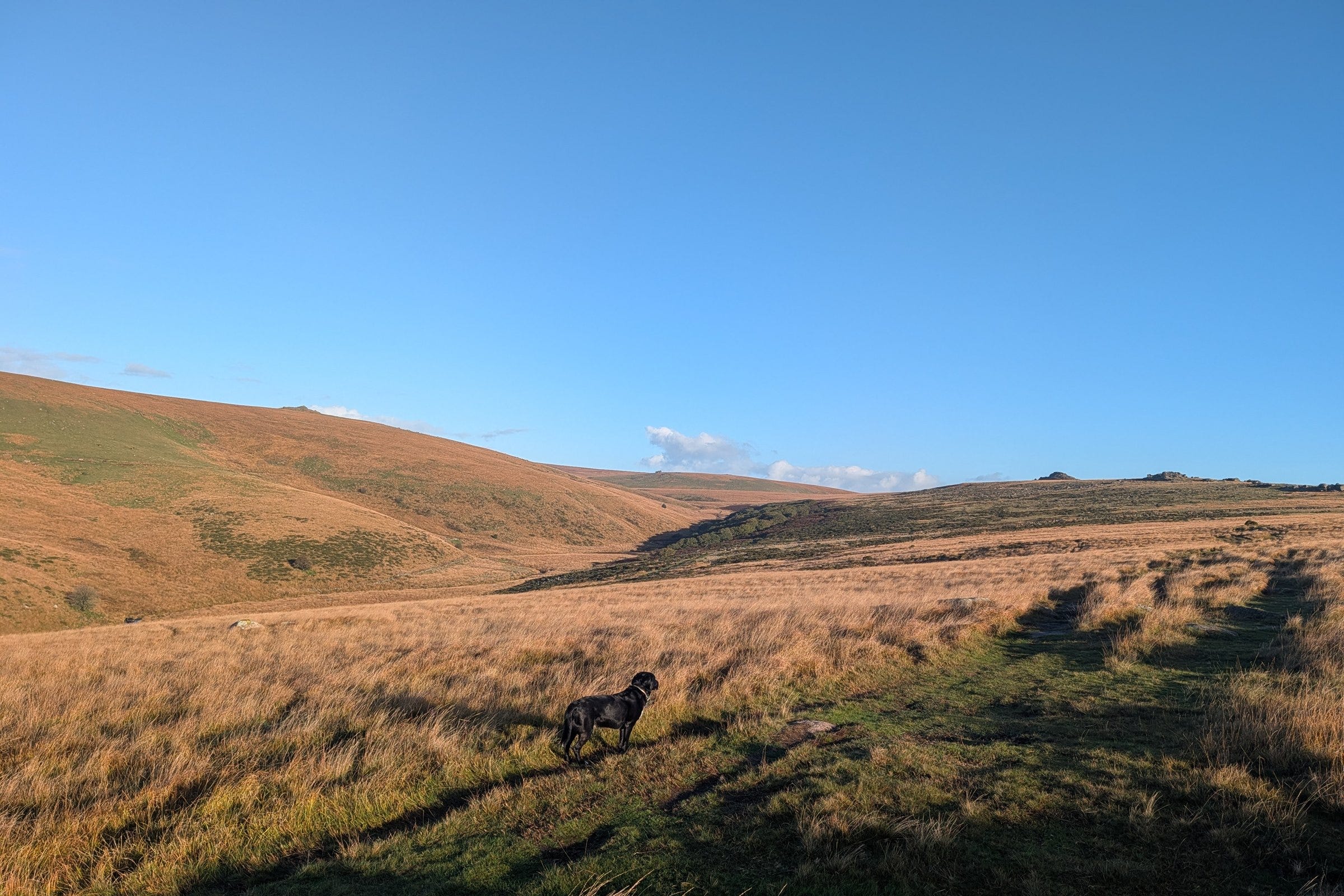
Even so, sunshine and heating demand barely overlap.
3. Heat pumps matter more than people think
A heat pump doesn't burn anything. It moves heat from the outside air into the house, the way a fridge moves heat out of its box, so it delivers more heat than the electricity it uses. Mine sits in a postwar prefab at the top of Princetown, one of the highest villages in England. Over four and a half winters it has turned 9,800 kWh of electricity into 32,000 kWh of heat, a ratio of about 3.3 (more on that here). Metered data from hundreds of British homes shows that 3 to 4 is normal for a well-installed system.
Now scale that up. In 2024 the UK used 458 TWh of energy on space heating and hot water, mostly gas burned in boilers that turn about 85% of it into heat. Heat pumps working at a ratio of 3 would deliver the same heat from about 130 TWh of electricity. Heating would go from nearly a third of all the energy the UK uses to about a tenth.
This is the part people miss. Electrifying heat doesn't mean finding 458 TWh of new electricity. It means finding about 130 TWh, around half of what the UK uses today. That's a lot, but it can be done. The catch is that it is needed in winter, when there is more wind and much less sun.
The bigger catch is the upfront cost, and it is the part people miss most. A heat pump costs about £12,000 to £14,000 to install, against perhaps £3,000 for a new gas boiler. That money has to come from somewhere: the homeowner's savings, a loan, or a government grant paid for by taxpayers. Multiply the gap by the more than 20 million British homes heated by gas and it comes to roughly £200bn. That is nearly three times the transmission investment Ofgem has just approved.
The grant doesn't make that go away; it moves it. The Boiler Upgrade Scheme pays £7,500 per home and has £625m to spend this year: about 83,000 homes. At that rate, converting 20 million homes would take more than 200 years. And ministers are already reported to want to cut the grant to help pay for defence. You can't conjure £200bn from nowhere. Either households find it, or something else gets less.
4. Wind and solar are not "free"
There is no fuel to buy for a wind or solar farm, so it is natural to think the electricity they make is free. It isn't. On top of the wholesale price for the power they sell, we pay most of them a subsidy:
Older farms get Renewables Obligation certificates for every unit they generate, whatever the wholesale price. I've argued before that this scheme now slows the transition it was meant to speed up.
Newer farms hold Contracts for Difference. These top their income up to a fixed "strike price" when wholesale prices are low, and make them pay money back when prices are high, as many did in 2022.
So the subsidy bill moves the opposite way to wholesale prices. It is biggest on stormy days, when output is highest and power is cheapest: the "surplus" days in my five stereotypes of the grid, when prices go negative and wind farms are paid to switch off. (Newer contracts stop paying when prices go negative. Renewables Obligation certificates keep coming, which is why some older farms will pay to keep generating.)
Why pay a subsidy at all? Because almost all of the cost of a wind or solar farm is paid up front: the turbines and panels, the land, the cables, the finance. Spread that cost over every unit the farm will make in its life, the way a mortgage spreads the price of a house over 25 years, and you get a cost per unit. Economists call this the levelised cost. The strike prices wind and solar farms bid in government auctions are the best public guide to it.
One warning before the numbers: levelised cost is the cost at the farm gate, not the cost of getting the power to your house. It is not the full system cost. Wind farms in the North Sea or the north of Scotland are among the cheapest in Britain to build and run, but Dartmoor is more than 500 miles away. Some of their power is lost as heat on the way. Getting the rest here takes new pylons and subsea cables, which cost billions of pounds and are paid for through network charges. It also needs backup for when the wind drops. None of that appears in the figures below.
I tried this on the room, framed as an opportunity. A single large, modern wind turbine near the village (not a small one) could produce electricity for 10p per kWh or less at the "system gate", where it joins the grid. That is well under half the 26p we pay. If the village could buy that power directly, at a price fixed for 15 years, Princetown could have cheaper electricity than anywhere around it, and know what it would pay until 2040. A private wire straight from the turbine would come closest to 10p. A local energy club through the existing grid, like the Totnes scheme and the arrangements new industry rules are bringing in, would still pay for the local wires and a supplier, but not the levies: my estimate is about 13p delivered, still half today's price. People were astonished, and the idea went down well. (I've written about how this could work for rural Britain.)
Then came the harder part: why the 10p turns into 26p on the bill. Most of the gap is everything else in the bill: network charges, supplier costs and what is left of the levies. And some of the power simply never arrives. Princetown is fed by a 10 km, 11,000-volt line up the hill from Yelverton. On a cold winter evening, with everyone's heating on, I'd estimate that about 8% of the power sent up it is lost as heat in the wire.
There was also a widespread recognition in the room, unsurprising among people who have chosen to live in the middle of a national park, that Dartmoor itself is neither wild nor in particularly good condition after decades of intensive farming. That matters for any turbine debate. The landscape a turbine would "spoil" is already heavily shaped by people.
On that basis, wind and solar are sometimes cheaper than gas and sometimes dearer.
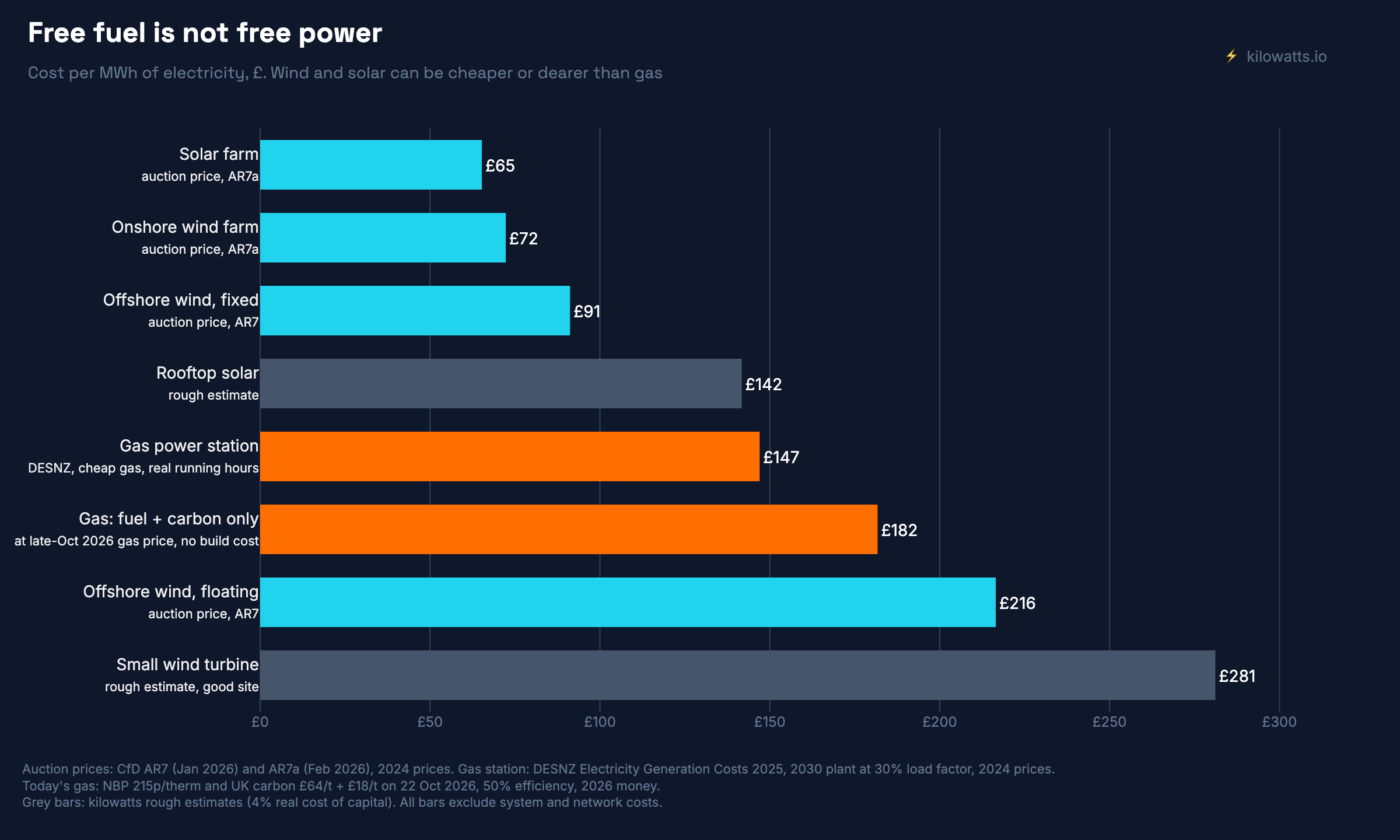
Cheaper: in the government's latest auctions, solar farms won contracts at £65 per MWh, onshore wind at £72 and offshore wind at £91 (2024 prices). A new gas power station costs about £147, on the government's own assumption of cheap gas and the hours gas plants actually run. At late-October gas prices the fuel and carbon alone cost about £180, before paying for the power station.
Dearer: floating offshore wind, the technology planned for the Celtic Sea off Devon and Cornwall, won contracts at £216, more than gas at almost any price.
Gas is subsidised too: gas power stations are paid through the Capacity Market just for being available when needed. The last two auctions will cost £2.6bn and £1.1bn in their first delivery years, and gas won more than half the capacity.
Not the whole bill: none of these figures include the cost of keeping the lights on when the wind drops (a Dunkelflaute): backup power, balancing and extra network. Sunshine has its own costs too: balancing the grid on hot, sunny days now costs seven times what it did in 2017. The government's most recent estimate, from 2020, adds roughly £12 to £31 per MWh to wind and solar. That is real money, but it doesn't change the order for onshore wind and solar farms.
Small and local is not cheaper
The instinct in a village hall is that small and local must be better. On cost, it is usually the other way round.
Rooftop solar costs a household about £1,550 per kW to install, against about £660 for a solar farm, and it makes less electricity per panel: a roof is rarely ideally angled. My rough estimate is that rooftop power costs £140 per MWh, about twice a solar farm.
Rooftop solar still pays for the household, because every unit used at home saves the full retail price: 26p per kWh, or £263 per MWh. Less than half of that is the cost of the electricity itself. The rest pays for the networks, supplier costs and policy schemes, and those costs don't go away when one house uses less. They are spread over everyone else's bills, including households with no roof of their own. Britain's energy levies are broken in similar ways. (Government moved most of the Renewables Obligation off bills in April 2026, and VAT on electricity is zero until the end of March 2027, so this is now mostly about networks rather than "green levies".)
There is a temptation to treat private savings as proof of public good. A friend with an electric car saved £1,500 on petrol last year. Another halved their energy bill with solar panels. Both are true, and both are welcome. But a saving on your bill is not the same as a benefit to the country, what economists call the system benefit. About half the price of petrol is tax, fuel duty plus VAT, so a good part of that £1,500 is tax the driver no longer pays, which has to be raised from someone else. Much of the solar household's saving is network and other costs moved onto their neighbours. The benefit to the country, less fuel burned and less carbon emitted, is real, but it is smaller than the savings suggest. Incentives are meant to change what people do. The trouble starts when we mistake the incentive for the benefit.
Small wind turbines are even more striking. A small turbine that bothers nobody is easy to like. But a turbine's output rises with the area its blades sweep and with the cube of the wind speed, and the wind is stronger higher up. A modern onshore machine with a 150 m rotor sweeps about 100 times the area of a 15 m small turbine, in wind about 30% faster at hub height. Small turbines cost several times more per kW and run at under 20% of their capacity on good rural sites, against 36% for a modern wind farm. Building-mounted ones manage under 10%. Scale is what makes wind cheap. If a village wants the benefit of local wind, a share in a big wind farm does far more than a small turbine of its own: my share of a Scottish wind farm shows how.
And then there are the wires
The hardest cost to explain is the network. Networks already make up about a quarter of a typical household energy bill. Ofgem's settlement for 2026–31 allows for over £70bn of electricity transmission investment, and expects network charges for an average household to rise by about £108 a year by 2031, with offsetting savings elsewhere. Wind farms are cheapest where the wind is, which is usually far from where people live, so cheap wind needs long, expensive wires. Britain built its power stations in the middle; the wind is at the edges. Solar has a network cost of its own: a solar farm holds its grid connection all year but only uses it to the full on sunny middays, while batteries and other projects queue for the same capacity.
What most people miss about network charges is that they are mostly the cost of money. Network companies borrow to build, and our bills repay that borrowing, with interest, over about 45 years. The value of what they have built also rises with inflation, so a burst of inflation lands on bills for decades. When interest rates rise, the same pylon costs more every year: £1bn of new network costs bill payers about £34m a year at a 2% real interest rate, and £56m at 5%.
The same principle runs through almost the whole energy transition. Wind farms, solar farms, heat pumps and electric cars all cost more to build and less to run than what they replace. A gas boiler or a petrol car is cheap to buy, and you pay for it as you go, through fuel. That makes the transition unusually sensitive to interest rates. Borrow the extra £10,000 for a heat pump over 15 years at 2% and it costs about £780 a year; at 7%, about £1,100. That difference alone can cancel out the running-cost savings. Cheap money in the 2010s flattered the numbers. Dearer money is a big part of why the transition now feels so expensive.
What this means for the South West
This is where the conversation in Princetown got most interesting.
The South West has built a lot of solar: 4.4 GW, more than any other English region. It has built almost no wind: 358 MW onshore and none offshore, after nine years in which new onshore wind in England was all but banned. And apart from the new line connecting Hinkley Point C, it has had no big pylon projects. Nothing major is planned for Devon or Cornwall.
Most people assume that leaves the region cleaner and better off. It doesn't.
Our electricity got dirtier. In 2019 the South West had the cleanest electricity of any region in Great Britain, largely thanks to the Hinkley Point B nuclear station. Hinkley B closed in August 2022. So far in 2026 the region's electricity has been about twice as carbon-intensive as the national average: gas has gone from about a third of the local mix to almost two thirds.
The grid is held up by paying gas plants. Grid operator NESO says most of its actions to keep voltage within safe limits are in the South West. Since Hinkley B closed, it has kept gas stations at Avonmouth, Plymouth and Southampton running for the region's voltage, and paid more than half a million pounds a day above market prices to do it. Part of the problem is the solar: on quiet, sunny days, local solar output with low demand pushes voltage up.
Even community solar gets switched off. Derril Water, a 42 MW solar farm at Pyworthy owned by about 9,500 households and small businesses, was ordered offline in May and only came back at the end of September. The co-op says the cause was an area-wide voltage problem, made worse by works at Alverdiscott substation. The fixes the grid operator commissioned at Taunton and Exeter were due by the end of 2025 and slipped to this autumn. Its members lost around £2m, and because the farm is connected to the local network rather than the national grid, it does not expect any compensation.
Local power cuts are the most frequent. In 2023/24, homes in the National Grid Electricity Distribution South West area had more interruptions than in any of Great Britain's 14 distribution areas.
The fix is years away. NESO is now buying grid-stability services at Exeter and Indian Queens, for delivery from 2029.
None of this means the lights are about to go out. NESO keeps the system secure, and the cost turns up on everyone's bills rather than as blackouts. But a region that has, understandably, resisted turbines and pylons now relies on a few gas power stations, paid to keep running, more than anywhere else in the country. That surprises almost everyone I explain it to.
So what
The people in Princetown Community Centre were right to be angry. British households pay some of the highest electricity prices in the world, and much of that comes from decisions they had no say in. Their frustration was aimed at the government, energy companies and landlords, and some of it is deserved.
But there is no free option waiting behind them. Every route to cheaper, cleaner energy costs money up front, and someone always pays: homeowners, taxpayers, bill payers, or the neighbours who can't fit solar panels.
So the questions worth asking in a village hall are harder ones:
Where is the energy actually going? Mostly on heat. A plan that doesn't deal with heating, and with who pays the £200bn for heat pumps, isn't a plan.
What does it cost everyone, not just me? Rooftop solar and a small turbine feel cheap to the people who own them. Big wind and solar farms are cheaper for everyone.
Who pays, and when? Subsidies, grants and network charges all land on someone. The costs nobody can see are the ones nobody fixes.
What are we willing to have nearby? In the South West, saying no to turbines and pylons hasn't meant no cost. It has meant paying gas power stations to keep the grid steady.
That is a harder conversation than "it's free, and they're stopping us having it". It's also the one that gets bills down, and a village hall on a stormy night is a good place to start it.
Ask NGED if they’ll explore reconductoring your village to a bigger cross section cable to reduce losses. or an upgrade to 33 kV if there was a business case (more generation or load in the village) would cut the losses by ~90%