


German does not have one word for the feeling of an EV and heat-pump owner watching diesel and gas prices spike. It has several, and I made most of them up this week. English needs a whole sentence for each of these feelings. German gets away with a single noun.
So here is a small dictionary. Two pages of it, for tearing out and sticking on the fridge next to the smart-meter display:
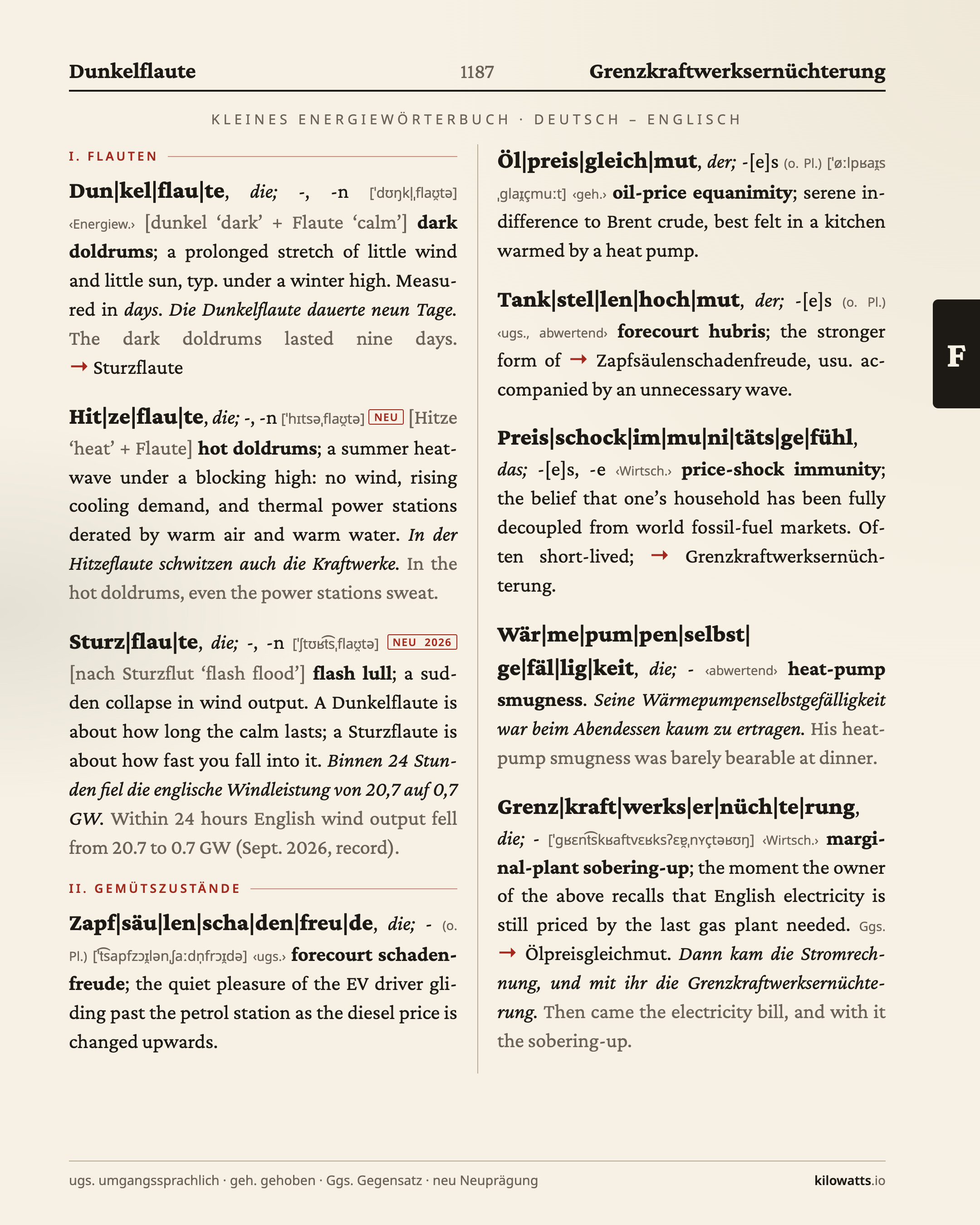
I've written "England" throughout, although most of the numbers are for Great Britain. That is what a German would say, and it makes the compound nouns land better.
I. Flauten: the lulls
Dunkelflaute (die)
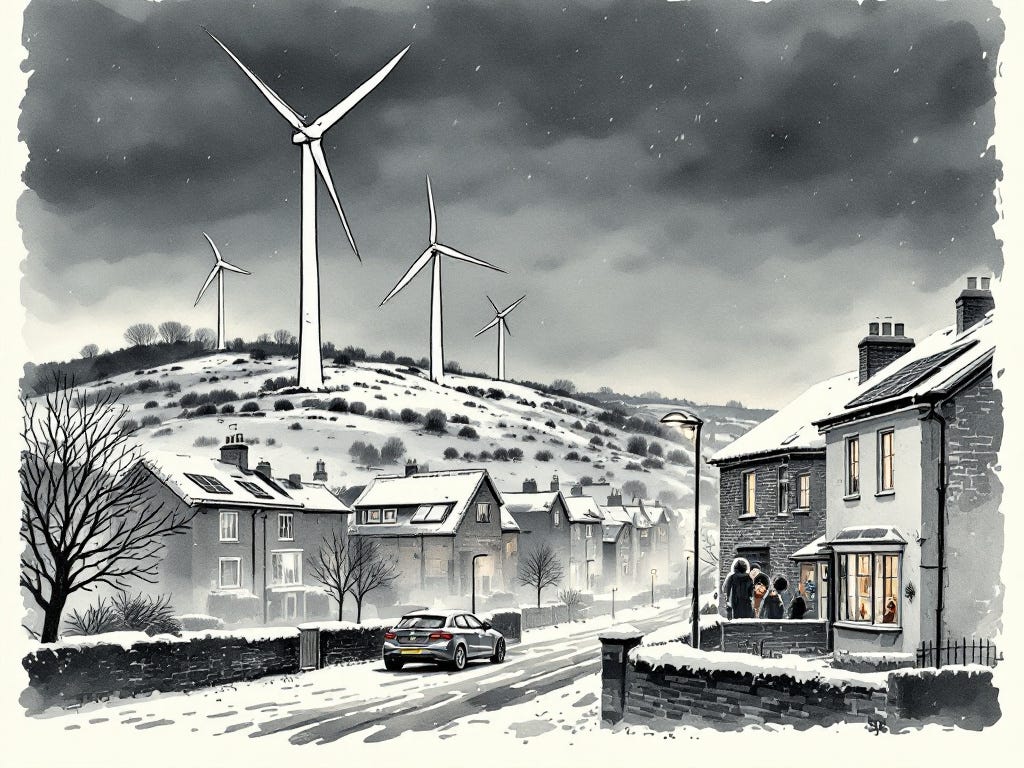
Dark doldrums. The one word you already know. A winter high parks itself over the North Sea, the wind stops, the sun barely rises, and it stays that way for days. It's the word that ends every argument about renewables at the pub, usually wrongly.
Siehe auch: Firmness Is a Function of the Window
Hitzeflaute (die)
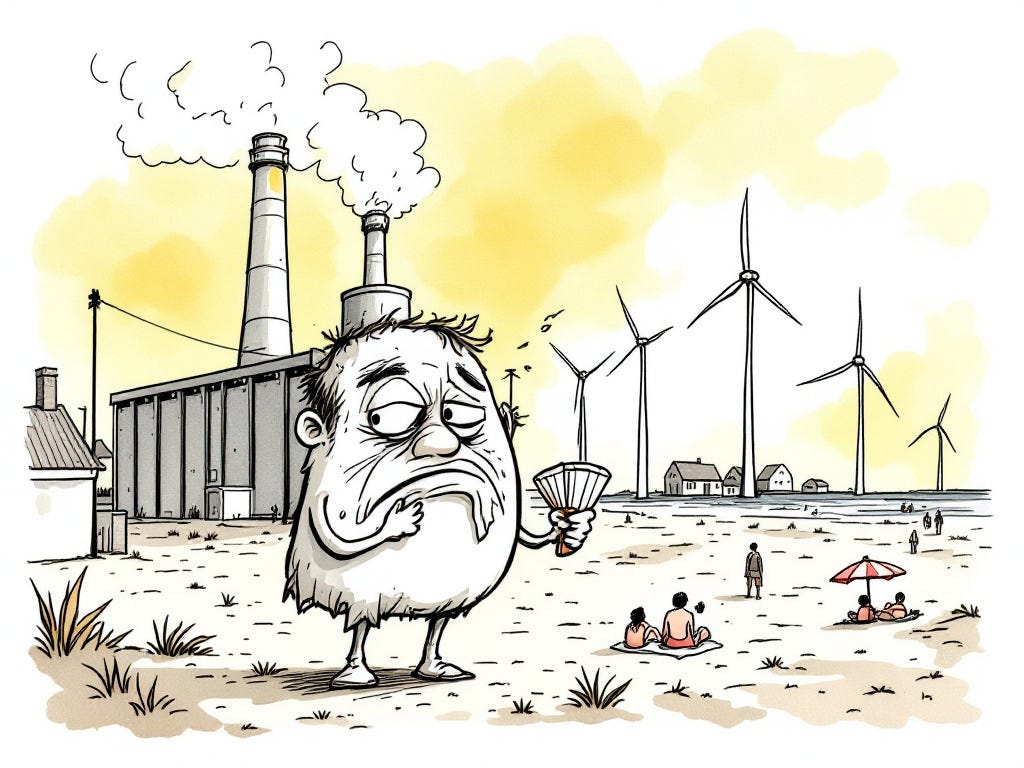
Hot doldrums. The summer version. The same kind of blocking high, but in July: no wind, air conditioners humming, and the gas power stations everyone was counting on quietly derated because the air they cool with is too warm. Nuclear, cooled by the sea, barely notices. The wind turbines have nothing to notice.
Siehe auch: The evening air conditioning pushed Britain past its reserve · We built a power grid to watch winter. Summer is coming for it.
Sturzflaute (die)
Flash lull, by analogy with Sturzflut, a flash flood. My contribution from earlier this month. A Dunkelflaute is about how long the calm lasts. A Sturzflaute is about how fast you fall into it. This September, English wind output fell from 20.7 GW to 0.7 GW in 24 hours, a record, and there were five collapses of 10 GW or more in 13 days.
Siehe auch: Britain just had a record 20 GW wind collapse · The wrong type of wind
II. Gemütszustände: states of mind
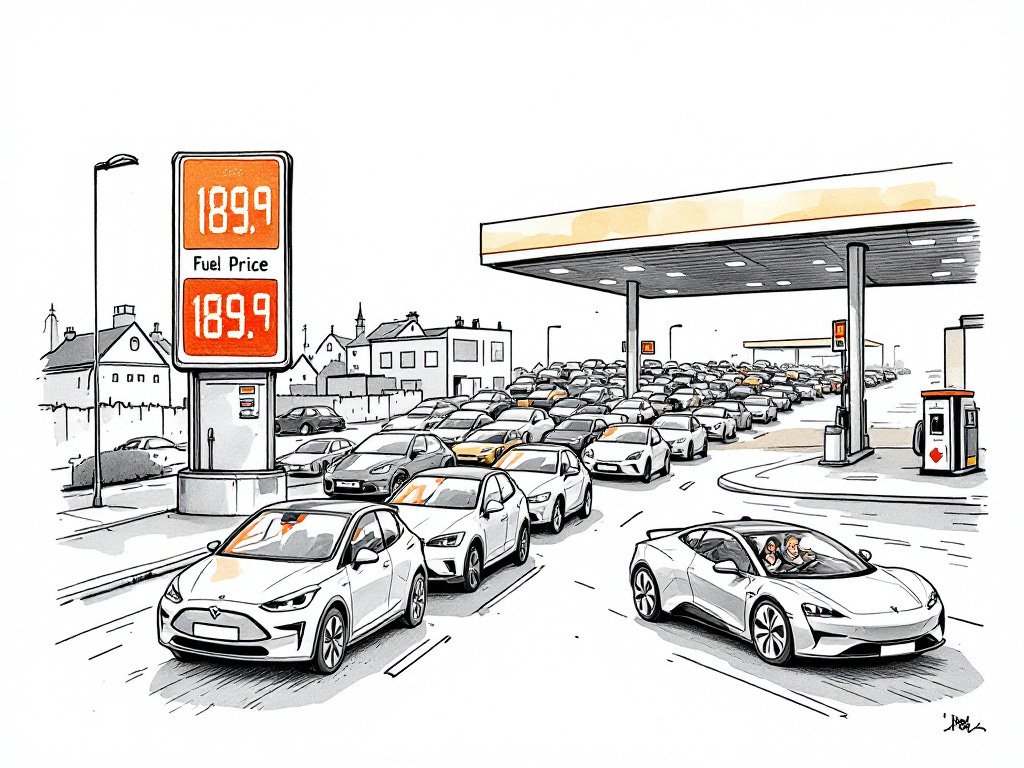
Zapfsäulenschadenfreude (die)
Forecourt schadenfreude. The quiet pleasure of gliding past a queue for the pumps, in an electric car, on the morning the price display goes up again. It is best enjoyed silently. It is almost never enjoyed silently.
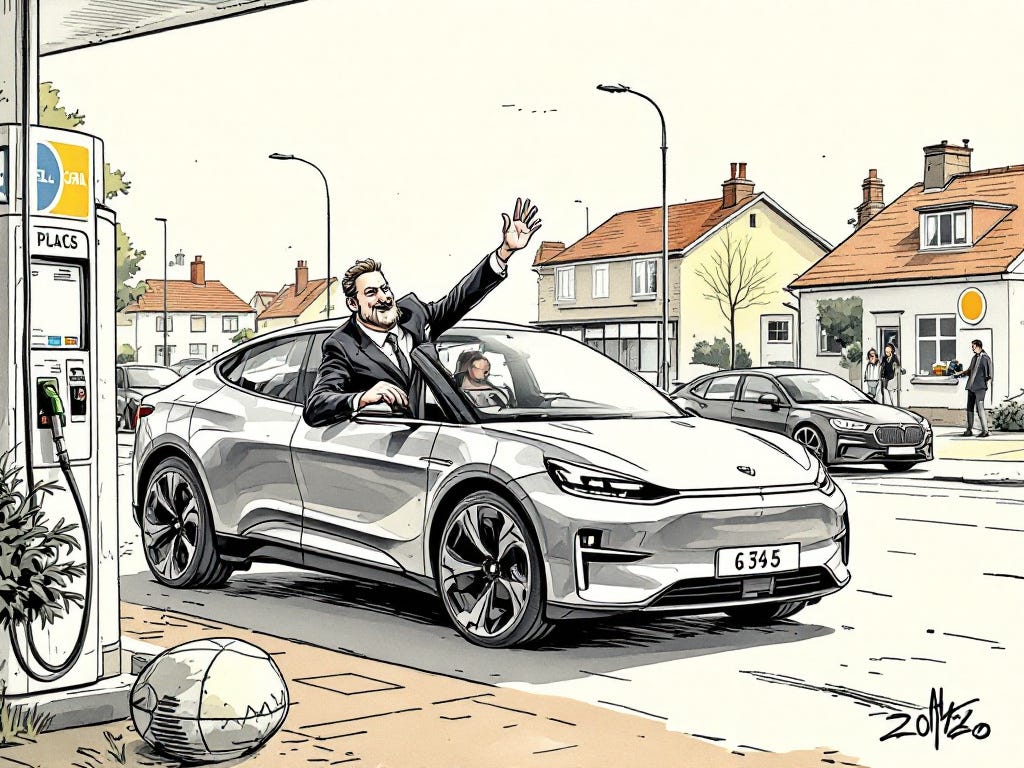
Tankstellenhochmut (der)
Forecourt hubris. The advanced form of the above, usually accompanied by an unnecessary wave.
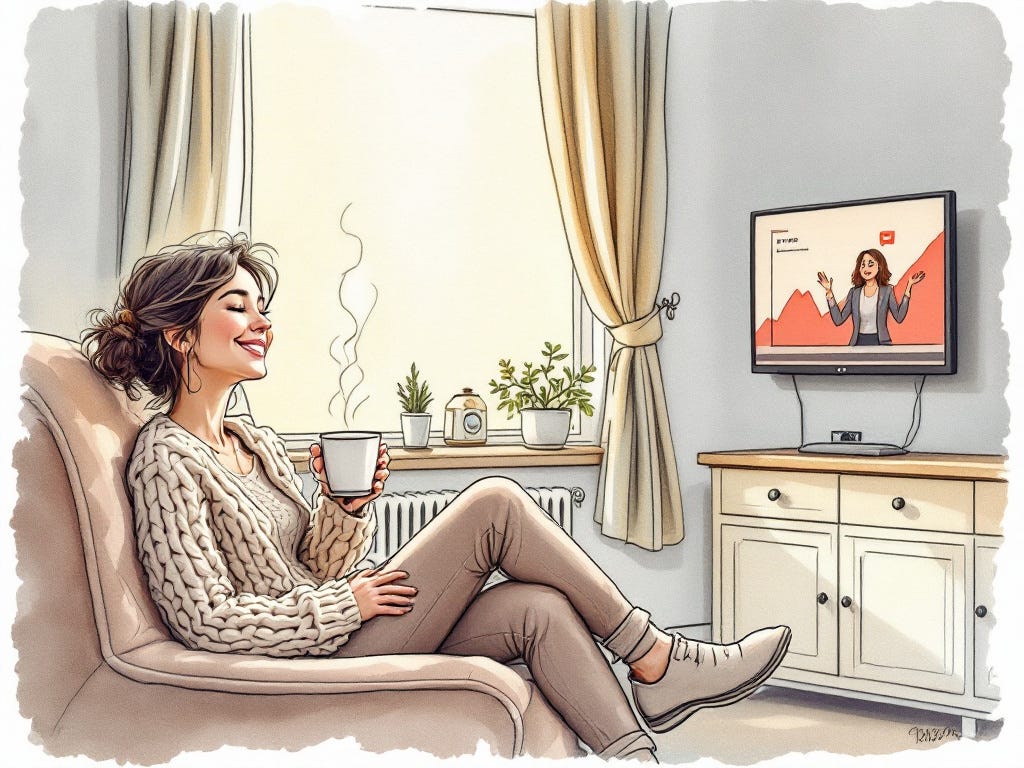
Ölpreisgleichmut (der)
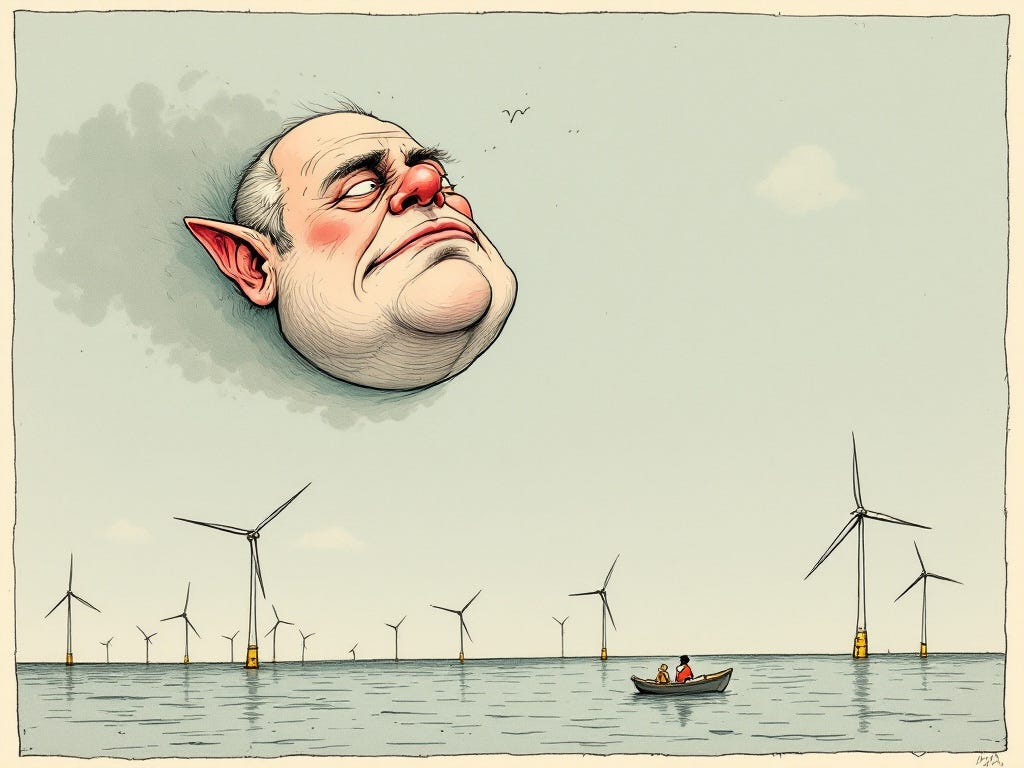
Oil-price equanimity. Serene indifference to Brent crude, best felt in a kitchen warmed by a heat pump while the news gets excited. The formal register. Tankstellenhochmut in a cardigan.
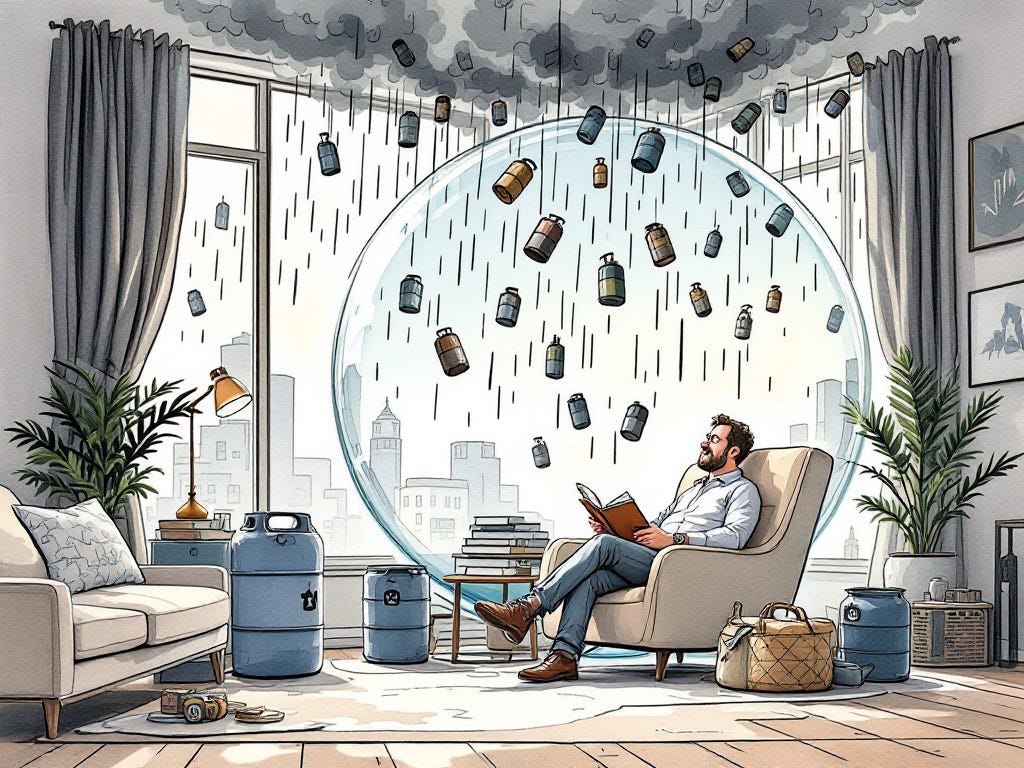
Preisschockimmunitätsgefühl (das)
The feeling of price-shock immunity. The belief that your household has been fully cut loose from world fossil-fuel markets. Often short-lived. See below.
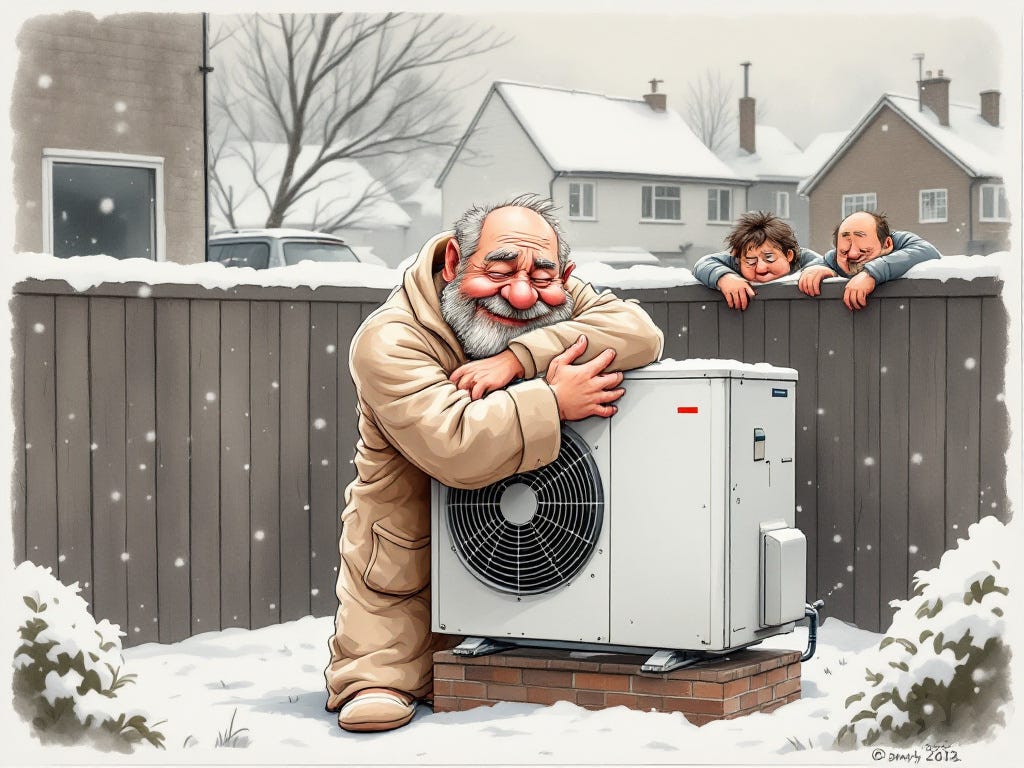
Wärmepumpenselbstgefälligkeit (die)
Heat-pump smugness. Marked abwertend (pejorative) in the dictionary, and rightly so. Seine Wärmepumpenselbstgefälligkeit war beim Abendessen kaum zu ertragen: his heat-pump smugness was barely bearable at dinner.
Siehe auch: Heat pumps age like Bordeaux. PV like Beaujolais Nouveau. · Heatpump Mythbusting
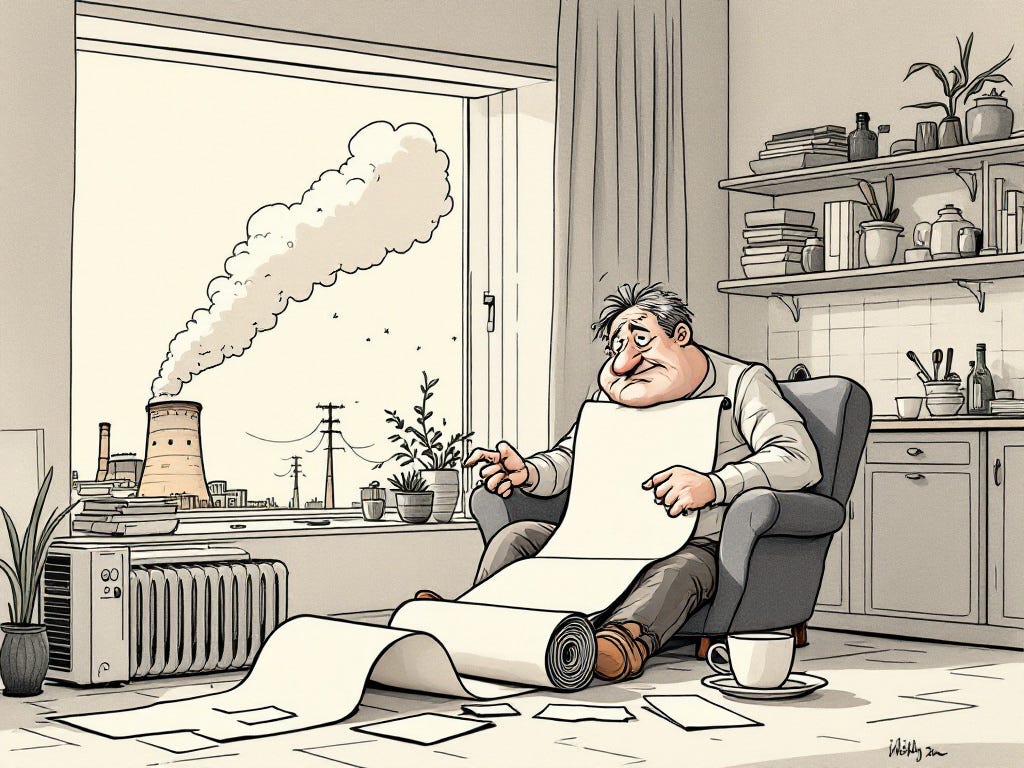
Grenzkraftwerksernüchterung (die)
Marginal-plant sobering-up. The moment the owner of all of the above opens the electricity bill and remembers that English power is still, much of the time, priced by the last gas plant the system needs. The gas price you escaped at the forecourt and the boiler comes back in through the wholesale market. Your battery, your solar and your cheap overnight rate soften it. They don't cancel it.
Siehe auch: Energy bills are going up £30. Not £221. · Every Night at Midnight, Britain's Green Levy Turns Into a Pumpkin
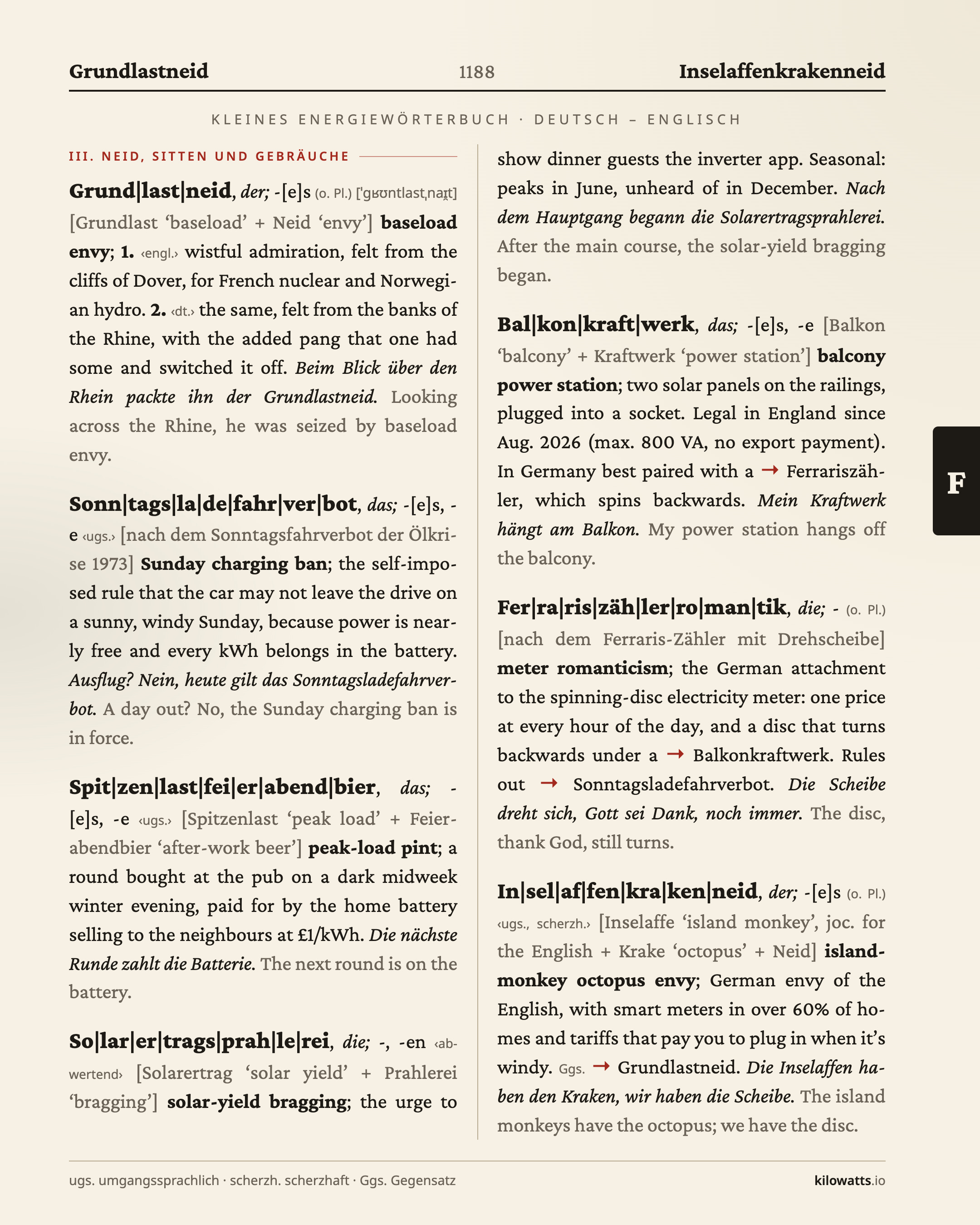
III. Neid, Sitten und Gebräuche: envy, customs and habits
Grundlastneid (der)
Baseload envy. Two senses.
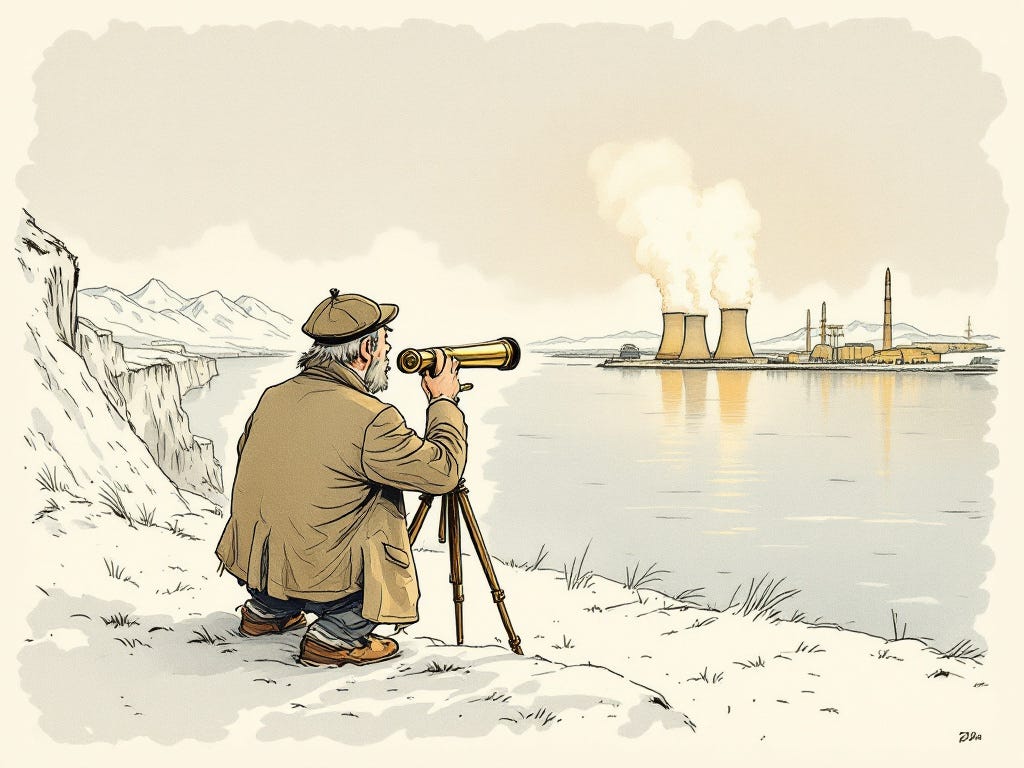
1. (English) Wistful admiration, felt from the cliffs of Dover, for French nuclear and Norwegian hydro: neighbours who simply have a great deal of cheap, clean, firm power and never seem to think about it. England spends its evenings working out where the next gigawatt is coming from. Norway spends them wondering what to do with the money.
2. (German) The same, felt from the banks of the Rhine, with an added pang: Germany had some, and switched it off. Its last three reactors closed in April 2023. Fessenheim, France's oldest nuclear plant, sat on the Rhine right at the German border until 2020, when it closed after years of German campaigning. On a still winter evening Germany now imports French power across the Rhine and Norwegian hydro down the NordLink cable. There is a word for that feeling too, Atomausstiegsreue, nuclear-exit regret. It's being saved for the second edition, because it starts fights.
Siehe auch: The Night France Saved the British Grid · Europe's hydro drought has moved north · Hinkley Point C Is Late
Sonntagsladefahrverbot (das)
The Sunday charging ban. Named after the Sonntagsfahrverbot, the car-free Sundays West Germany imposed during the 1973 oil crisis. This version is self-imposed and runs the other way. On a sunny, windy Sunday the car does not leave the drive, because electricity is nearly free, occasionally negative, and every kWh belongs in the battery. The day out can wait for a still, grey Tuesday.
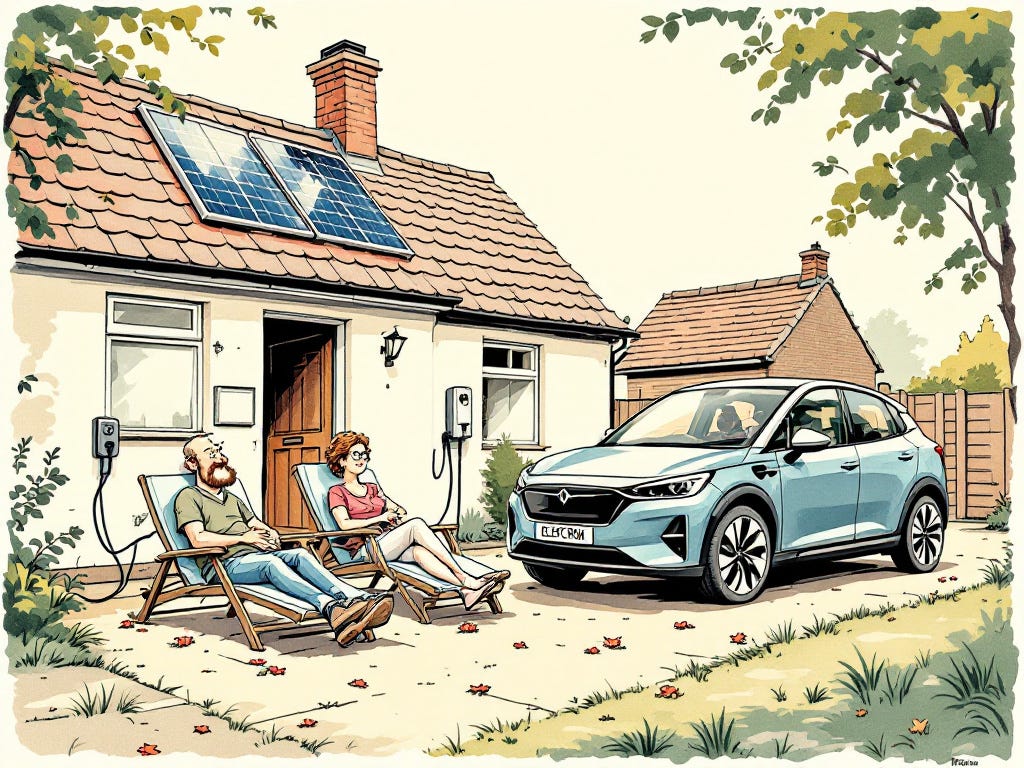
Siehe auch: Britain just set a curtailment record · Every winter night, Britain's cheap-rate tariffs hit the grid like a World Cup whistle
Spitzenlastfeierabendbier (das)
The peak-load pint. A round bought at the pub on a dark midweek winter evening, paid for by the home battery selling power to the neighbours at £1/kWh. The electrons, being lazy, go next door. The money goes to the bar. Die nächste Runde zahlt die Batterie: the next round is on the battery.

Siehe auch: Younger batteries think older solar is a cheap date
Solarertragsprahlerei (die)
Solar-yield bragging. The urge to show dinner guests the inverter app. A German friend assures me this one is real and widespread. It is seasonal: it peaks in June and is unheard of in December.
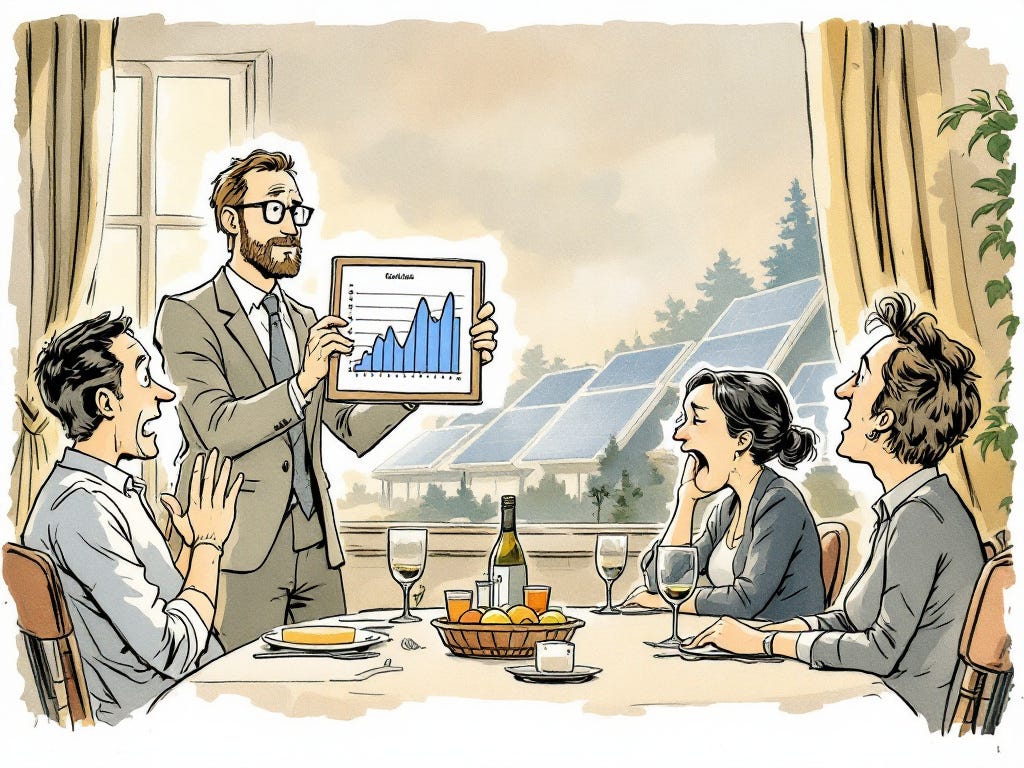
Siehe auch: The Solar Cliff
Balkonkraftwerk (das)
Balcony power station. A real word, not one of mine: two solar panels strapped to the balcony railing and plugged into an ordinary socket. Germany has them everywhere. England legalised them on 27 August 2026, capped at 800 VA and with no payment for anything you export, which is why my advice was not to rush. The German advantage was never the panels. It's the meter. See the next entry.
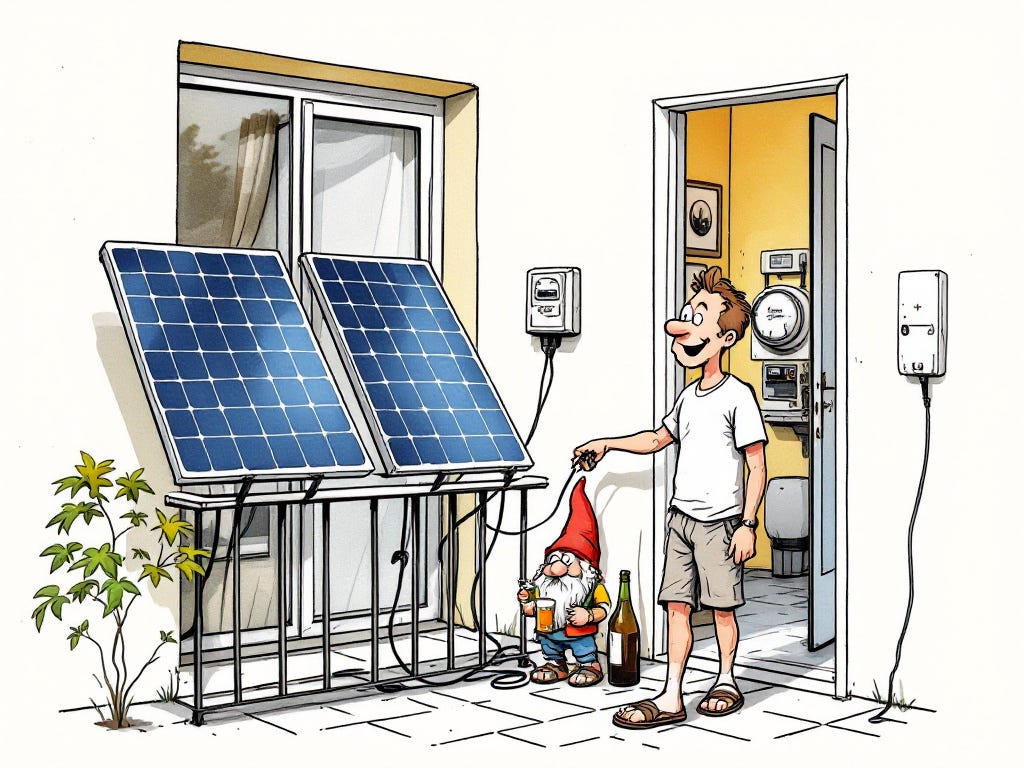
Siehe auch: Don't Rush to Buy Plug-in Solar · Plug-in solar is a red herring
Ferrariszählerromantik (die)
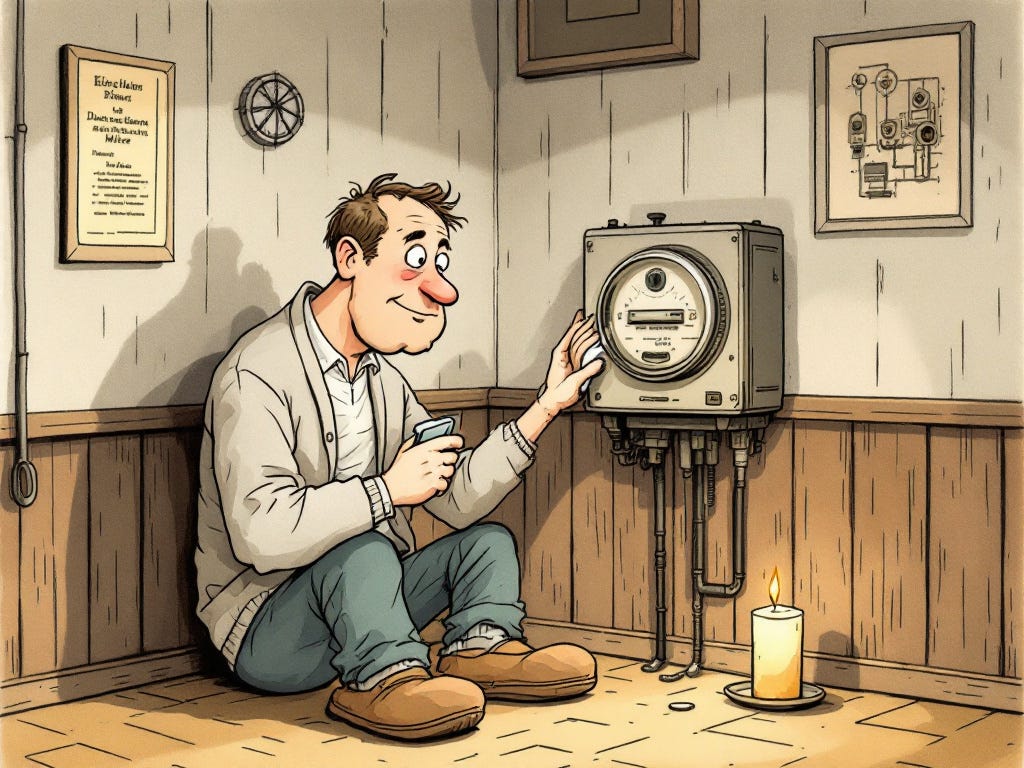
Meter romanticism. The German attachment to the Ferraris-Zähler, the old electricity meter with the spinning disc. Only about 5.5% of German homes have a smart meter. The rest have a Ferraris, which has no idea which way the power is flowing. When the Balkonkraftwerk exports, the disc simply turns backwards until the network operator gets round to swapping it: net metering at the full retail price, by accident. Germany's stalled smart-meter rollout turned out to be the best subsidy balcony solar ever had. The price is one rate at every hour of the day, so there's no Sonntagsladefahrverbot for anyone.
Inselaffenkrakenneid (der)
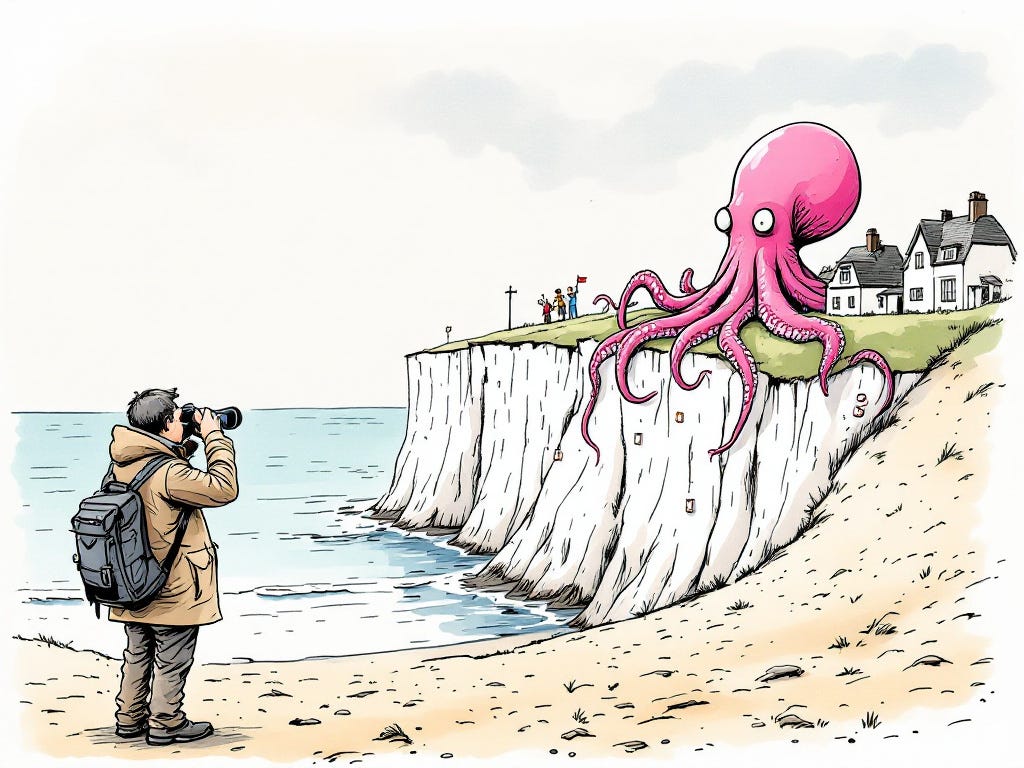
Island-monkey octopus envy. The mirror image of Grundlastneid. Inselaffen, island monkeys, is what Germans call the English when they are being affectionately rude. Krake is German for octopus. This is the envy felt looking the other way across the Channel, at a country with smart meters in more than six homes in ten and energy suppliers that invent a new tariff every month, some of which pay you to plug in when it's windy.
The English, being English, have spent a decade complaining about the smart meters, and only started using them for proper half-hourly settlement last November. Die Inselaffen haben den Kraken, wir haben die Scheibe: the island monkeys have the octopus; we have the disc.
Siehe auch: Britain never really switched its smart meters on. Until now.
Nachtrag: addenda
This dictionary is incomplete. What's the German for the feeling of your car finishing charging five minutes before the cheap rate ends? For explaining a heat pump to your father-in-law? Suggestions in the comments. The best ones go in the second edition.