
The pumped storage that doesn't need a mountain
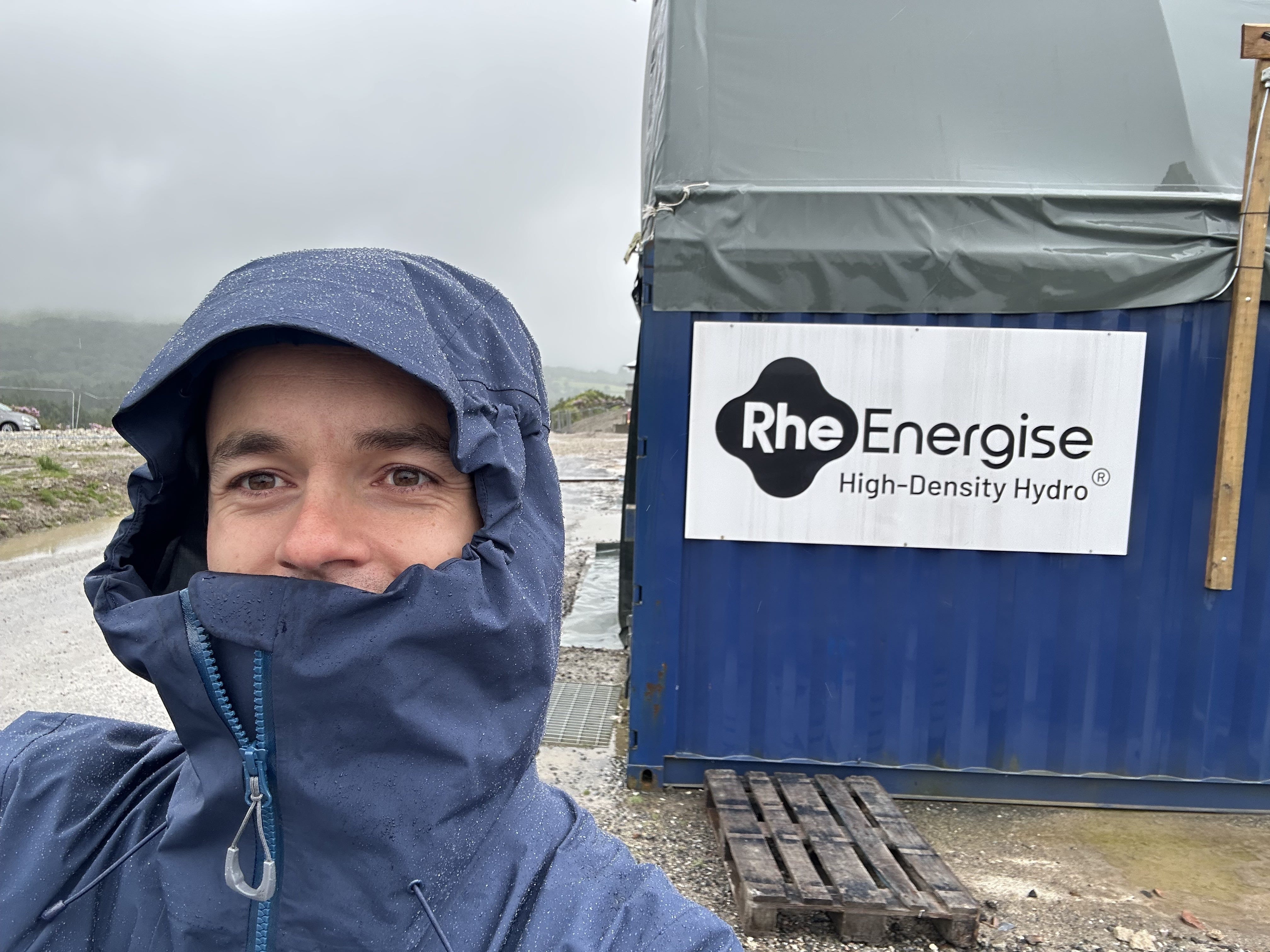
Visiting RheEnergise's High-Density Hydro rig on Dartmoor
I got to visit RheEnergise's High-Density Hydro test rig, just down the hill from my home on Dartmoor — and it's one of the more elegant answers I've seen to the storage problem.
Storage is the hard part of electrification. Lithium-ion has transformed how we balance within-day swings on the grid, but for the really heavy lifting we still lean on pumped hydro — and the UK simply doesn't have enough big mountains and rivers for it. Our existing plants (Dinorwig, Ffestiniog, Cruachan) are the darlings of the grid, delivering power in ten seconds and cycling once or twice a day. We just can't build many more.
RheEnergise's trick: if you can't get more height or more water, make the water heavier. Not radioactive — just dense. They mix in the densest materials they can find to create a fluid that stores far more energy per drop. The recipe is the secret sauce, and it's already patented.
It looks a lot like the "clay slip" my potter wife works with: shaken in a medicine bottle it's startlingly heavy next to plain water, yet weirdly consistent despite being so viscous.
The Devon site is clever too — a former China Clay works, so there's an artificial hill of (relatively) soft soil to bury a reservoir in, plus an on-site power offtaker already hungry for energy. This is a device they send down inside the pipes to clean them, a bit like a bullet in a gun barrel:
The pumps and turbines are specially calibrated for the heavier-than-water fluid, and the rig is wired into the distribution grid, charging and discharging at around 500kW — which they demonstrated live during our visit.
I even got to sit in the control seat. I just had to promise not to push any buttons.
What strikes me is where this fits in the bigger picture. Like conventional pumped hydro, high-density hydro is a highish round-trip efficiency store — you get most of the energy back out — which makes it well suited to the daily rhythm of charging and discharging the grid. That's a different problem from interseasonal storage, where you're holding energy for weeks or months and the raw cost per kWh of capacity matters far more than efficiency — the natural home of hydrogen or iron-air ("iron filings") batteries. High-density hydro isn't trying to compete with those. It complements pumped storage, extending its reach to the many places that don't happen to have a mountain.
If you're curious about the cutting edge of energy storage, RheEnergise are well worth watching.


