Forget “fog in channel”, this weekend, my nerdy newsfeed was inundated with power traders posting about the severely low negative wholesale prices in continental Europe. While us Brits often forget the events in our nearest neighbours these days, there’s are some big warning signs about the risk of unmanaged and excessive PV build out in countries with similar climates (and sunshine!) levels to us like the Netherlands, Belgium and Germany.
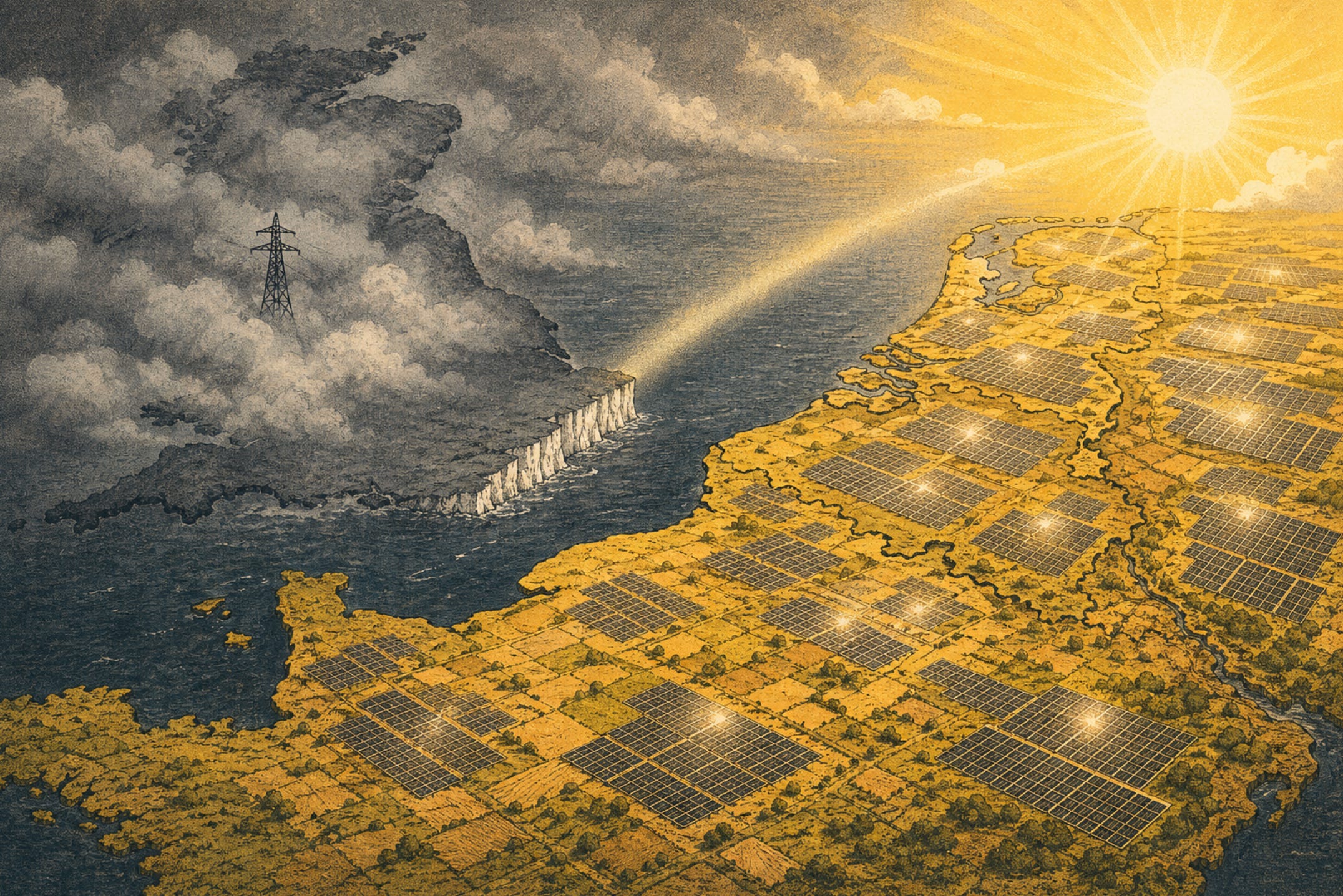
In particular the continued use of net metering in the Netherlands, where behind the meter PV customers like households get to offset export credits from summer to the winter means there is little incentive to limit exports. It’s to be abolished, but not until 1st January 2027.
In case you haven’t already seen it, here’s a Sunday lunchtime snapshot (thanks Electricity Maps). TLDR → the continental grid is basically browning out from uncurtailable PV power, and users are were being payed up to €487/MWh to increase demand (at the day ahead stage). That’s like being paid 45p/kwh to use electricity. Put another way, it’s a bit like the wind curtailment payments we hear a lot about in Scotland, but instead of hapening in the balancing mechanism and being paid by the system operator, the cost is being pushed into the commercial/wholesale market.

Britain (and Ireland!) are outliers with a wholesale electricity price that’s neither close to zero or severely negative. For the uninitiated, let me explain quite clearly what the numbers mean.
In Ireland, the price of electricity is clearly being set by gas (CCGT) plants, with a price. Though Ireland has a lot of wind farms, like in Britain it wasn’t as windy in the Emerald Isle as it has been of late
In Britain, I’d argue the wholesale price is being influenced, if not explicitly set by gas, it’s just below the cost of the most efficient plants. It wasn’t that windy, and it was cloudier than recent days. The network constraints were on our ability to import power from the continent rather than south from a windy Scotland. A 50% outage on the IFA interconnector to France will have been very costly to its owners, as it could have netted a £500/MWh difference in prices, £500m an hour. In layperson speak, Britain missed an opportunity to get paid to help curtail continental solar.
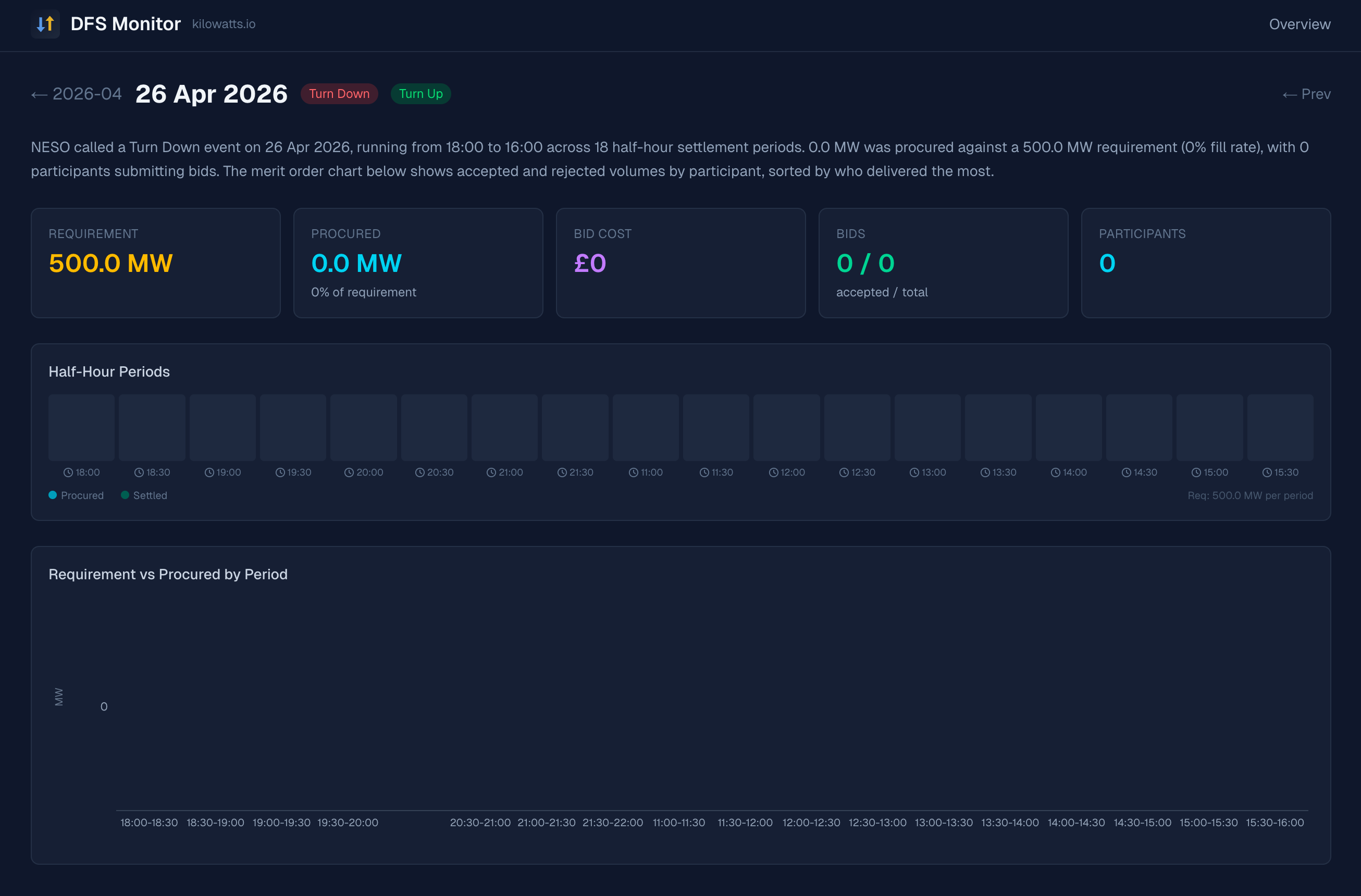
So far, so good. But here’s where the situation in Britain gets a bit stranger. NESO was trying out it’s Demand Flexibility Service turn-down, for the 5th time since launching it to much attention in the media earlier this month (do checkout my post here). You can see all the auctions at my DFS site here. Here’s Sunday 26th’s attempt:
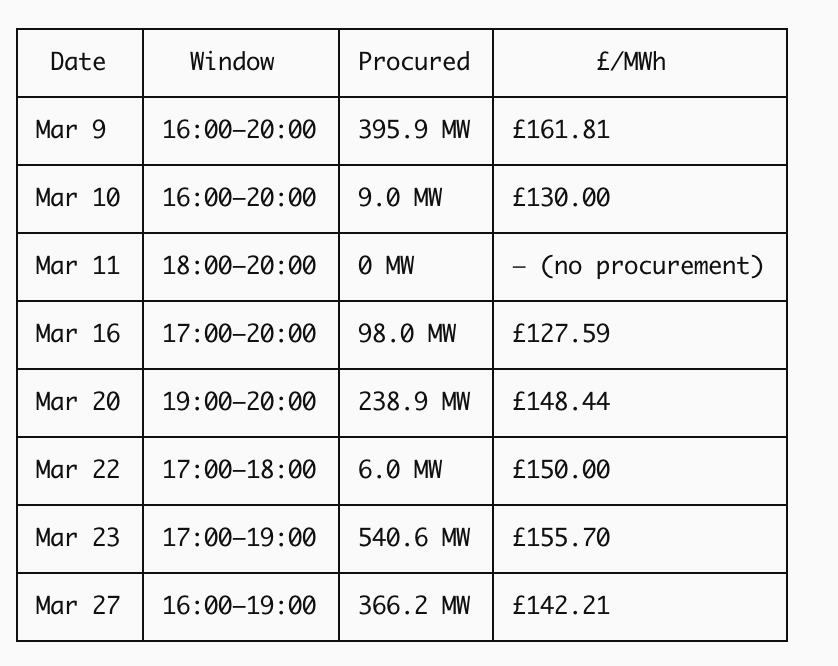
Broadly speaking, the turn-up auctions haven’t been particularly successful so far, especially compared to turn-down events on the same platform/service where NESO has been paying £150/MWh or so (15p/kwh) for evening turn down. That’s arguably expensive, even compared to elevated gas prices, but nothing crazy, and relatively consistent over time: