


1. Versus PV: depreciation, degradation and cannibalisation
Most big expenses depreciate, including low-carbon purchases like EVs. Solar PV is doubly so. The hardware itself degrades — the panels lose about 0.5 % of their rated output each year through cell ageing, with the inverter shaving off another ~0.2 %. On top of that there’s an economic version: as more PV gets added to the grid, every existing install faces newer, cheaper competition for the same midday hours, and the carbon and £ each kWh fetches falls accordingly — what economists call cannibalisation. A kWh of GB solar in 2025 displaces 47 % less carbon than the same kWh did in 2019, and captures 13% less of the baseload price.
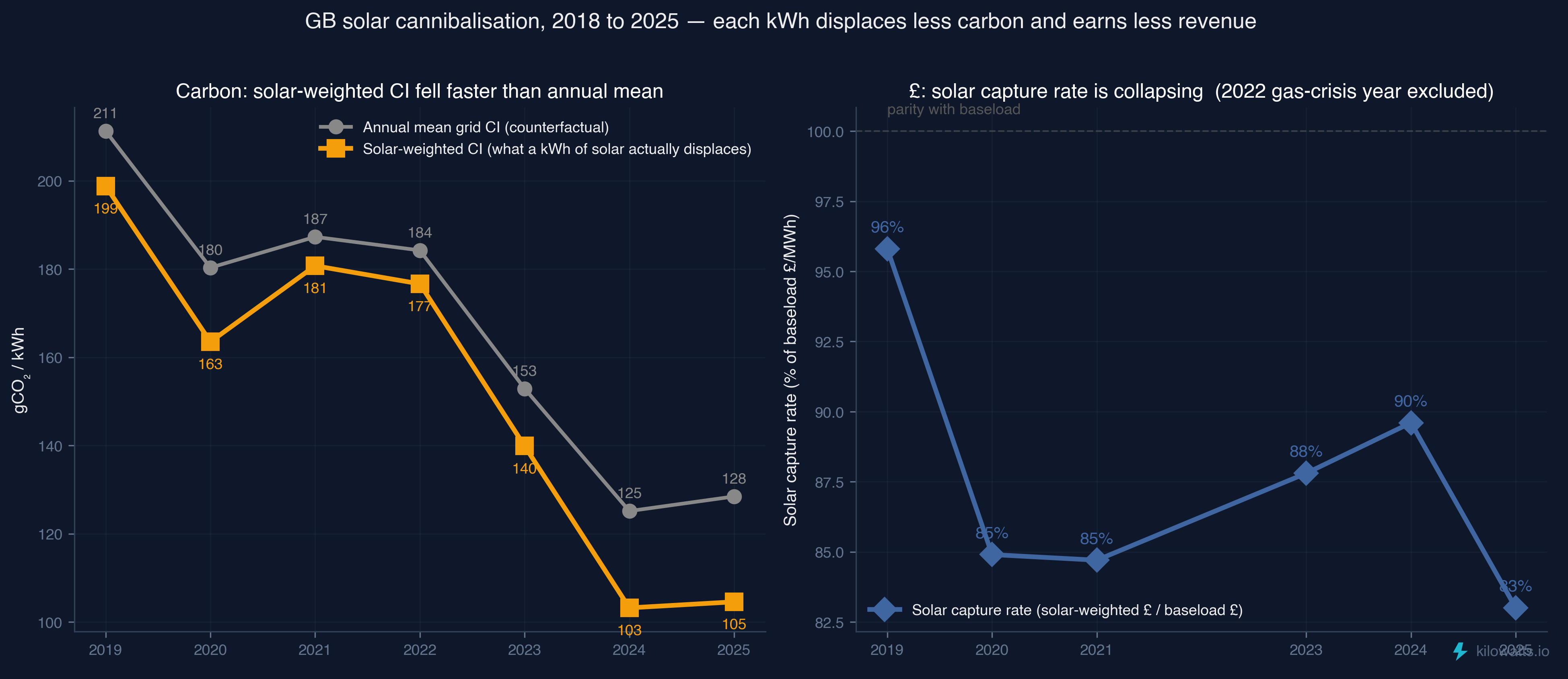
PV ages like Beaujolais Nouveau — best drunk in its first year, less valuable with every vintage that follows. (I should declare an interest here: as a student I worked “les vendanges” twice there. Nouveau drops mid-November and the good bottles don’t last to Christmas — the ones that do, by definition, weren’t great fresh, so I’ve mulled them. Which is roughly what a home battery does to surplus midday PV.)
Heat pumps age like a vintage Bordeaux — laid down today, drinking better every winter, peaking only after a decade in the cellar. Unlike PV and batteries, they haven’t really got cheaper over time either; and the more generous grant they currently enjoy can’t last forever
Not entirely without risk, though: the hail-strike vintage is the cold, low-wind winter that hasn’t happened yet — the one that arrives with millions more heat pumps on the grid than today. See section 5.