


On 10 November I spoke at Montel UK Energy Day at the QEII Centre on keeping industry in the UK. (The slides are here.) I put two questions to the room. Which industry are we actually keeping? And how does a firm in Britain cut its power bill? This piece is the first question. The second is the next piece.
The short answer to the first: much less of the old kind than most people assume, and a lot of a new kind that the system isn't built for.
Same output, half the energy
Start with a number that surprises people. British industry makes about as much as it did in 2000. DESNZ's output index was 101 in 2025, against 100 in 2000. But its energy use has halved, from 411 TWh to 201 TWh (Energy Consumption in the UK 2026, tables C1 and I4).
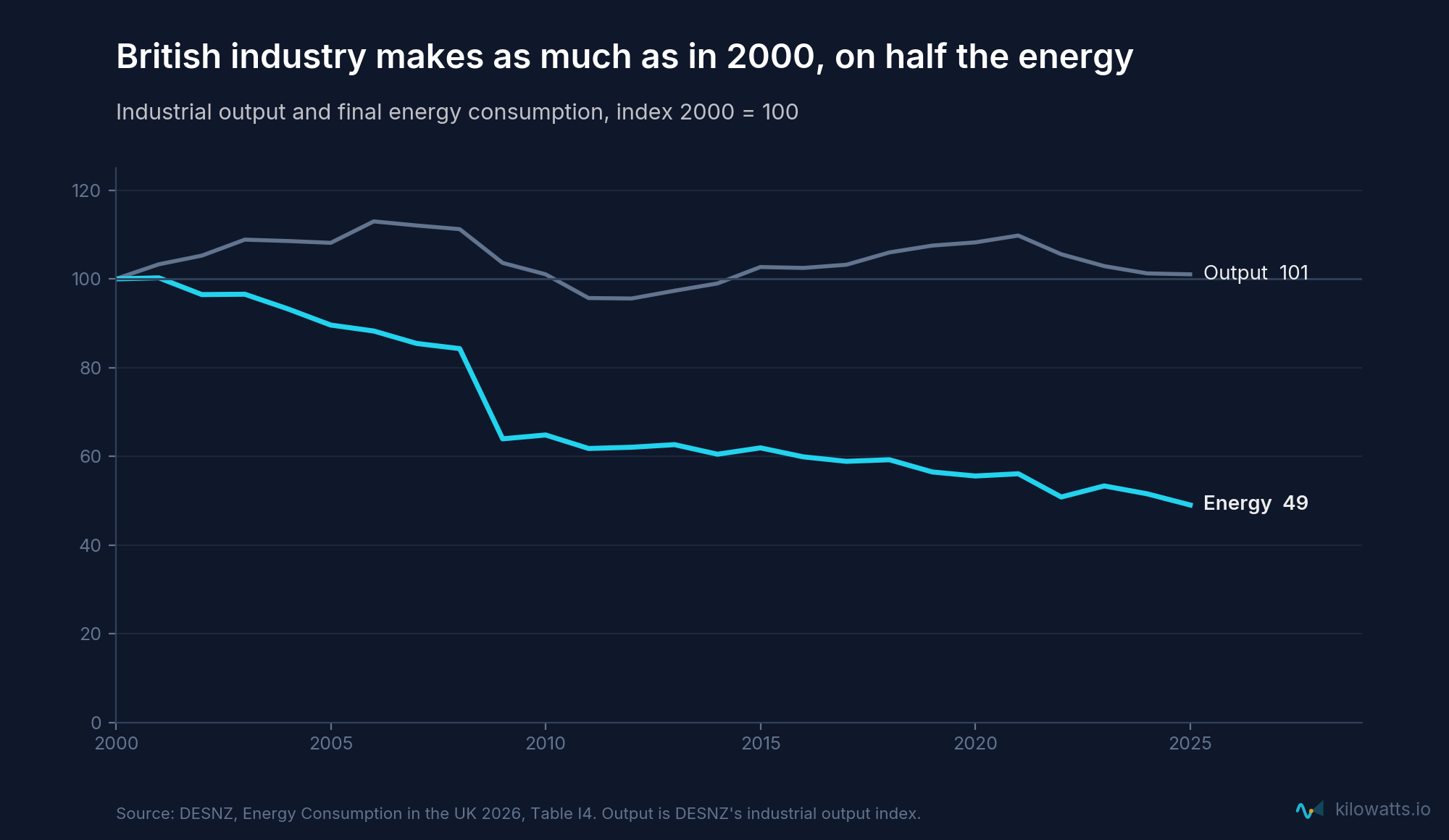
DESNZ puts the whole of that fall down to intensity, not output: industry got less energy-hungry, and what it makes shifted towards things that need less energy to make. Part of the 2008–09 step is a break in the statistics, so don't read too much into any one year. The direction is clear.
Look at which fuel fell. Industrial gas use is down 65% since 2000, from 181.5 TWh to 63.7 TWh. Electricity is down 33%. Electricity has gone from about 28% of industry's energy to 38%, and it's now the biggest single fuel. Gas has gone from 44% to 32%.
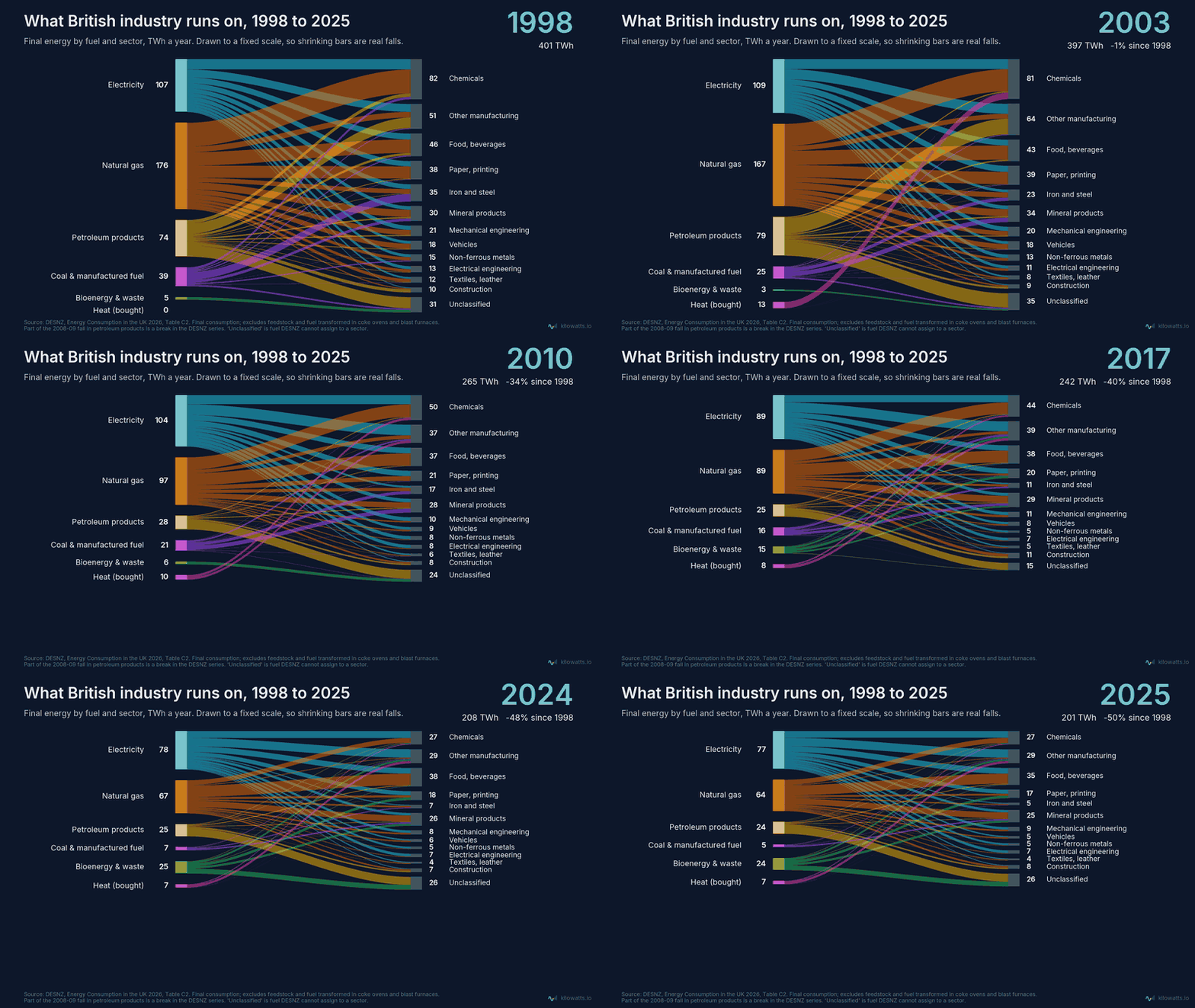
That's odd, if you follow the headlines about British energy prices. The headlines are about electricity, and fairly. In the second half of 2025 a large British industrial site paid 21.8p/kWh for electricity, including taxes. The median across the EU and the UK was 10.6p. Britain was the dearest of the 26 countries with data, 105% above the median.
Gas is the other way round. The same site paid 3.85p/kWh for gas, 6.5% below the median of 4.12p, and below Germany's 4.76p (DESNZ international industrial energy prices).
So British industry walked away fastest from the fuel we're not expensive on. Some of that is switching from gas to electricity. Most of it is intensity: making the same output with much less energy. The statistics don't say how much is which.
That's why industry is less exposed to the next gas shock than it was in 2008. It isn't more resilient. There's just less of it.